
Get free quotes from non-destructive testing services near you
Takes about a minute. Free, no obligation; providers reply to you directly.
I walked into a piece of equipment showroom in 2019 convinced that a top-tier ultrasonic flaw detector would solve our inspection bottleneck. Cost me $28,000. We unboxed it, the technicians stared at the interface for twenty minutes, and within a week it was collecting dust while they went back to their five-year-old handheld unit they actually understood. The expensive gear didn’t fix the fact that we hadn’t trained anyone on it—and nobody at the manufacturer thought that mattered.
That’s when I realized something most NDT inspection firms never articulate out loud: equipment is maybe 40% of the inspection equation. The other 60% is method selection, technique, training, and knowing what you’re actually looking for. Yet the industry spends enormous energy marketing gear like it’s the hero of the story. It isn’t.
The Short Version:Most NDT inspection firms overbuy flashy equipment when they should be obsessing over method-to-application matching, portable deployment capability, and proper calibration infrastructure. The wireless sensors and AI-powered analysis tools are real improvements—but they fix workflow inefficiency, not detection accuracy. Expensive gear amplifies bad technique. It doesn’t replace it.
Key Takeaways
- The six core NDT methods (RT, UT, MT, PT, ET, VT) target different defect types—pick the wrong method and no amount of equipment spend fixes it
- Portability, intuitive UI, and accessory ecosystem matter more than brand prestige or processing power
- Wireless connectivity and 3D modeling are legitimate operational gains (they save hours in post-processing), but marketing often frames them as capability upgrades when they’re actually efficiency plays
- Calibration compliance isn’t negotiable; it’s literally the difference between admissible inspection data and liability
The Six Core Tools—And What They Actually Do
Any NDT inspection firm operates with six fundamental methods, each engineered for specific defect classes. Here’s the non-marketing version:
Radiographic Testing (RT): X-ray and gamma-ray systems. Detects internal voids, inclusions, and density variations inside materials. Slow, requires shielding and safety protocols, excellent for thick welds and castings. Not portable. Not quick.
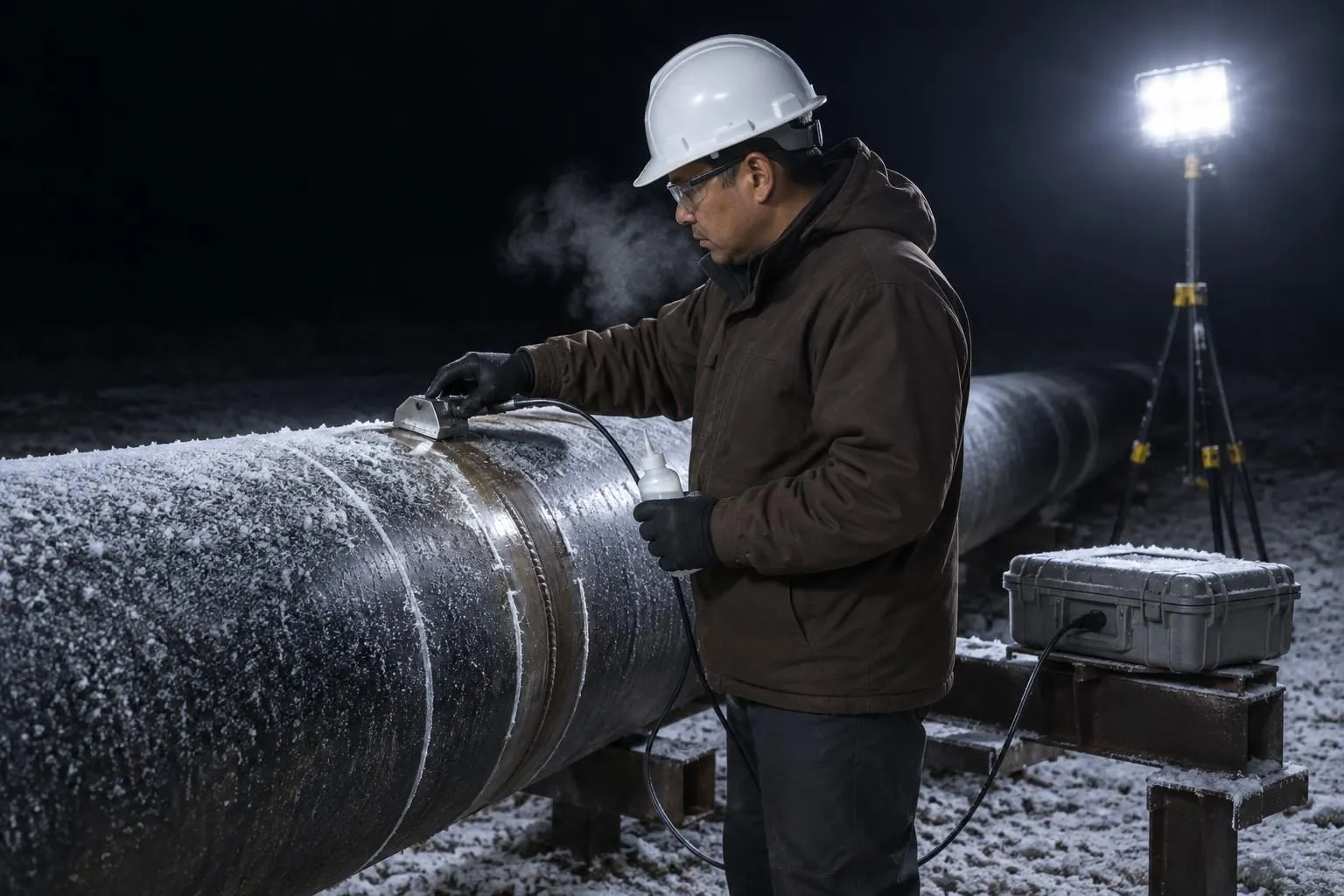
Ultrasonic Testing (UT): Instruments that ping materials with high-frequency sound waves to detect internal flaws and measure thickness. The industry workhorse. Portable, field-deployable, requires couplant (the gel that bridges the transducer to the material—nobody mentions this in marketing, but running out of it derails inspections).
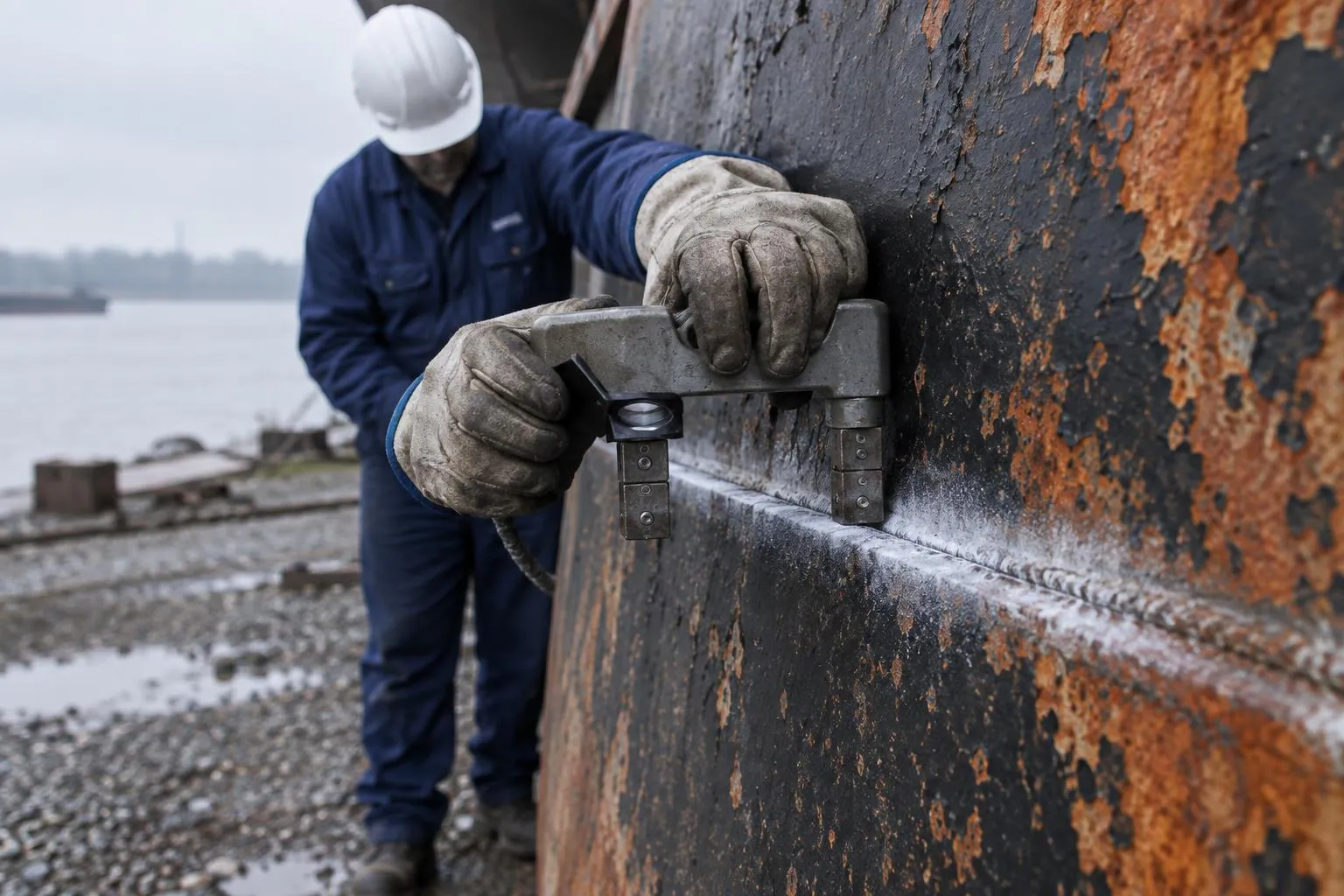
Magnetic Particle Testing (MT): Only works on ferromagnetic materials (iron, steel, nickel). Magnetizes the part, sprinkles iron particles that cluster around surface/near-surface defects. Fast, inexpensive, highly visible results. Limited to certain alloys.
Liquid Penetrant Testing (PT): Dye-based. You coat the surface with colored dye, let it seep into cracks, wipe it off, apply developer powder to highlight defects. Works on non-ferromagnetic materials UT struggles with. Messy. Requires surface prep. But cheap and reliable.
Eddy Current Testing (ET): Measures electrical conductivity to spot surface and near-surface defects. Excellent for detecting cracks in conductive materials. Sensitive to surface finish. Requires skilled technician interpretation.
Visual Testing (VT): Direct eyeball inspection, borescopes, and remote visual inspection (RVI) tools for confined spaces. Sounds simple. Isn’t. A quality borescope with integrated lighting can run $5,000+, and a technician’s ability to spot defects in cramped, dark spaces is a skill, not a feature.
What Actually Matters in Equipment Selection
1. Method-to-Application Matching (Solve This First)
I cannot overstate this: pick the wrong NDT method and you’ve already lost. No equipment upgrade fixes that.
You’re inspecting a turbine blade for subsurface stress cracks? UT. You’re looking at a weld on a pressure vessel? Probably RT or UT depending on thickness and access. You’re checking aircraft fastener holes for fatigue cracks? ET. You’re screening ferrous castings for surface porosity? MT is your fastest, cheapest answer.
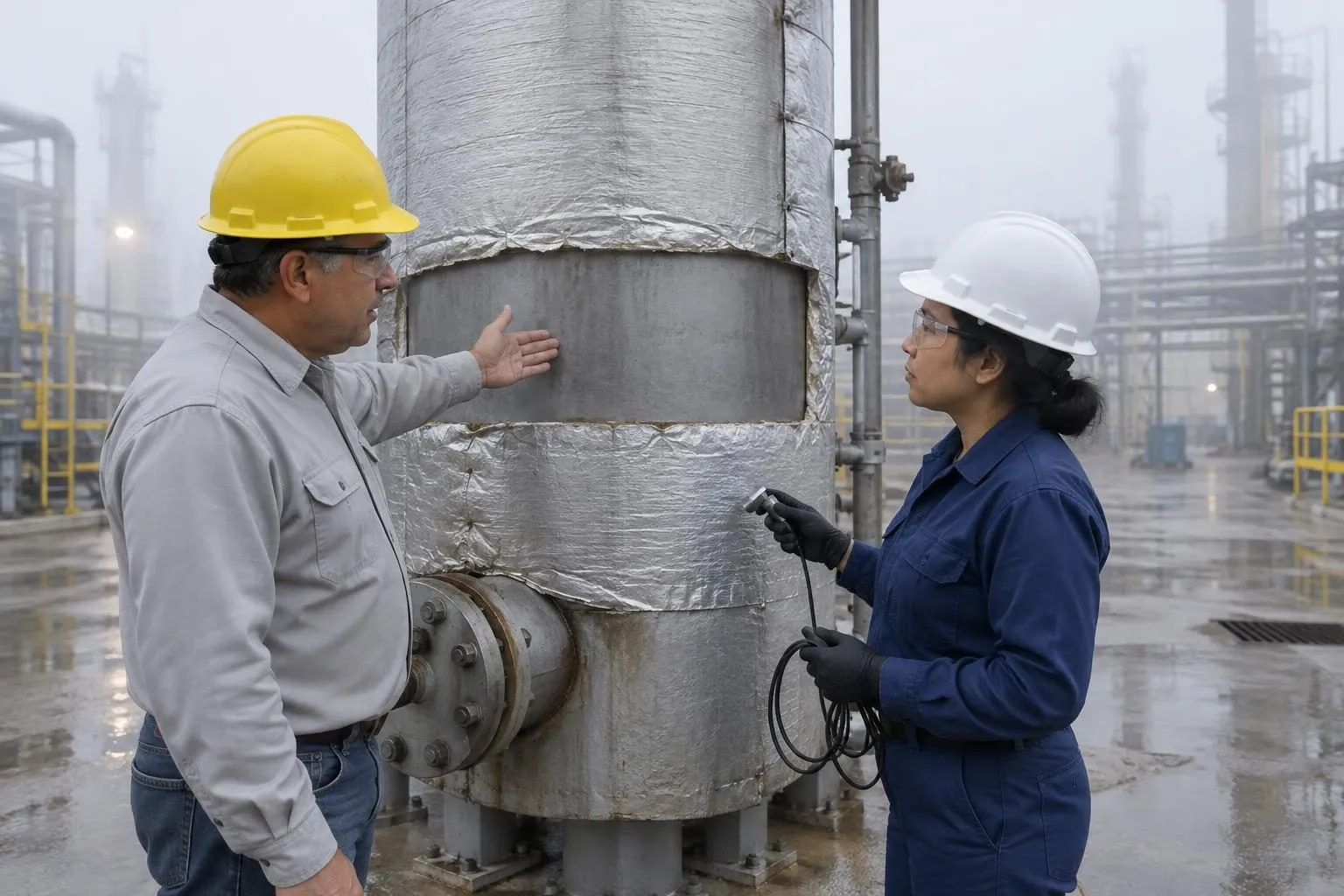
Reality Check:A firm that owns every tool often uses the wrong one because they own it. Sunk cost bias is real. Method selection should be driven by the defect mechanism and material properties, not by which equipment is gathering dust in the truck.
2. Portability and Field Deployment
Your inspection happens on a refinery floor, inside a pipe, at the top of a wind turbine, or in a submarine. Equipment that requires a cart, a power generator, and a setup procedure loses you hours and billable productivity.
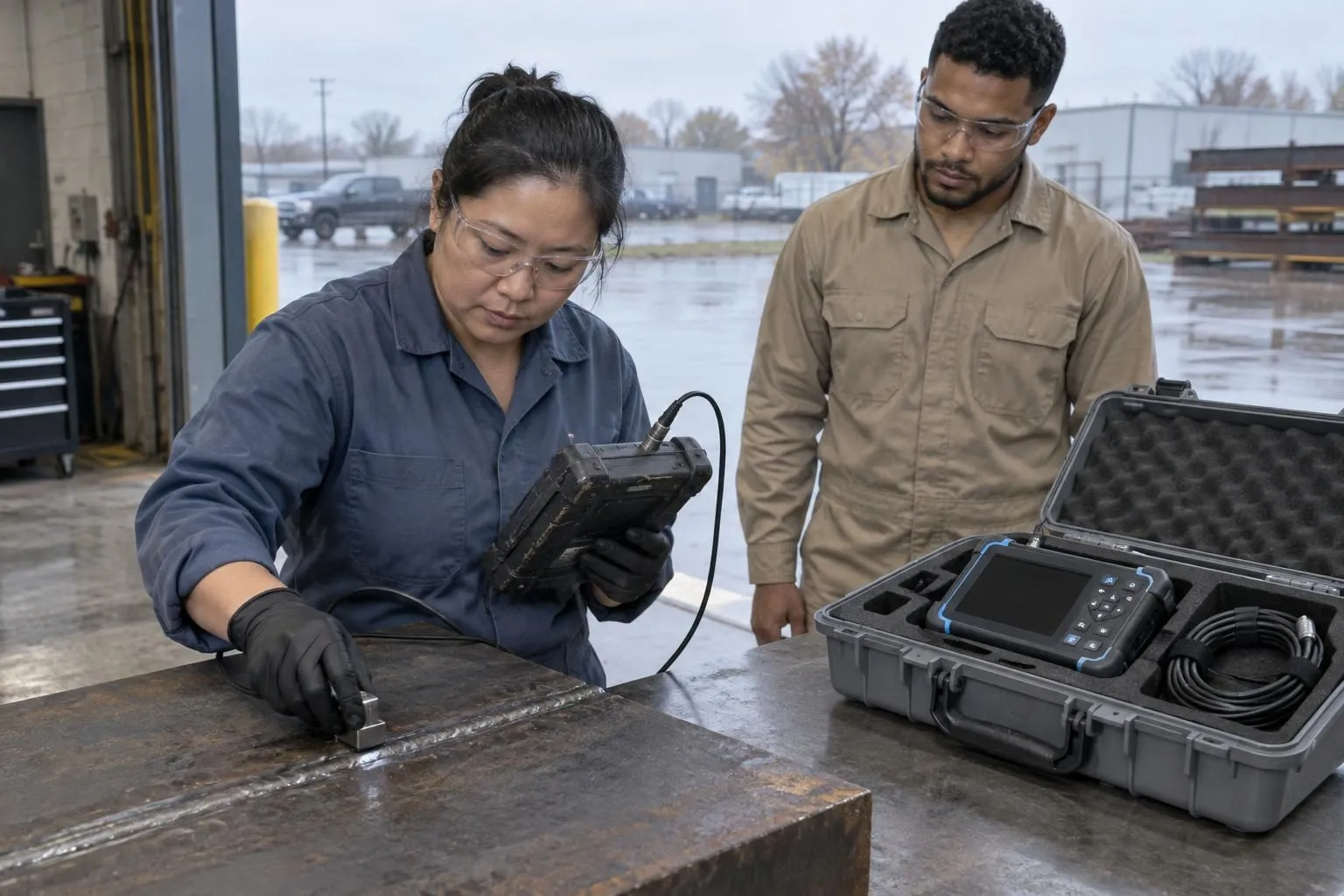
Modern handheld UT devices (like Olympus Epoch or GE Phasor) weigh under 2 pounds. They run on rechargeable batteries. They interface with wireless probes. This isn’t revolutionary—it’s practical. A technician who can walk from location to location without returning to a base station completes more inspections per day.
3. User Interface (Training Cost Is a Hidden Line Item)**
Equipment with buttons, menus, and four-line LCD displays used to be standard. Now you’ve got touchscreen interfaces designed by companies that actually studied how technicians work under pressure.
Better UI means fewer setup mistakes, faster calibration, less time spent digging through menus. That’s not sexy marketing. That’s $20,000 in recovered billable hours per technician per year.
4. Accessories and Calibration Infrastructure**
Here’s what nobody highlights in the glossy brochures: couplants, transducers, wedges, reference standards, and calibration blocks are where the actual work happens.
A UT transducer costs $200–$2,000 depending on frequency and material. Couplant (the acoustic gel) is $30/bottle and you burn through it fast. Magnetic particle test coils and suspension fluid are consumables. Liquid penetrant kits are one-use.
More importantly: calibration. ISO 9001 and ASME Section V compliance isn’t optional when you’re inspecting critical infrastructure. Your equipment must be traceable to certified reference standards. That means owning calibration blocks, scheduling annual third-party verification, and documenting it all.
Firms that treat accessories and calibration as afterthoughts end up with data that fails audit review. Expensive lesson.
5. Software Integration and Data Management**
This is where the 2024–2026 industry shift actually matters.
Real-time data transmission to cloud platforms. Integration with existing asset management systems. Automated report generation. These save hours in post-inspection workflow—which means faster client turnaround and more billable time per technician.
Software like Flyability’s Inspector 5.0 generates 3D models showing exact defect locations. Before this, inspectors spent hours reviewing footage and correlating imagery with physical asset maps. Now it’s automated. That’s not better detection—that’s eliminated busywork.
Pro Tip:When evaluating equipment, ask the vendor how it integrates with your existing systems. If they can’t answer, they’re selling you an island.
The Marketing vs. Reality Breakdown
| Claim | Reality | What It Actually Means |
|---|---|---|
| ”Wireless sensors revolutionize field deployment” | Wireless connectivity enables real-time data transmission and remote monitoring. Core inspection method unchanged. | You save 2-4 hours per project on data transfer and post-processing. Operational gain, not capability upgrade. |
| ”AI-powered defect analysis” | Software reduces manual interpretation and improves consistency in report generation. Doesn’t improve raw detection accuracy. | Less time writing reports; more legible data trails. But the technician’s skill in finding defects remains paramount. |
| ”Portable and wireless is the future” | Yes—and has been since 2018. Not future, present. | Make sure your older, non-wireless equipment isn’t being phased out unnecessarily. Sometimes wired is fine. |
| ”Automated NDT is replacing manual inspection” | Automation works for repetitive, well-defined scans. Complex assets still require human judgment. | Use automation for screening and high-volume work; keep manual inspection for tricky decisions. |
| ”3X faster inspection” | Marketing often conflates faster software with faster actual scanning. Scanning speed depends on the method and asset geometry. | Software speed-ups are real but modest—usually 15-25% in post-processing, not scanning itself. |
The Uncomfortable Truth About Expensive Gear
A technician with a $3,000 UT device and 10 years of experience will outperform a technician with a $25,000 system and six months of training. Every time.
Expensive equipment doesn’t compensate for poor technique, inadequate calibration discipline, or insufficient training. It amplifies it. A poorly set-up $40,000 RT system generates liability, not better data.
The firms that consistently win inspections aren’t buying the newest gear. They’re:
- Training technicians obsessively
- Maintaining strict calibration protocols
- Using the right method for the defect mechanism
- Building repeatable processes
- Documenting everything
Practical Bottom Line
When you’re evaluating equipment for your firm, ask these questions in this order:
- Is this method the right fit for the defect I’m trying to detect? (Before you even look at equipment.)
- Can my technicians actually use this in the field? (Weight, battery life, setup time.)
- Does it integrate with our existing software and reporting workflow? (Don’t create data silos.)
- What’s the accessory ecosystem and calibration burden? (Budget for consumables and compliance infrastructure.)
- Can we train the team to use it properly? (Don’t buy complexity you can’t support.)
Price comes last. If it comes first, you’ve already lost the decision.
The expensive gear doesn’t fix bad technique. It just makes expensive bad technique. Invest in method selection and technician training first. Let the equipment follow.
For a deeper dive into how NDT firms structure their operations around the right tools, check out The Complete Guide to NDT Inspection Firms.
Done reading? Get quotes from NDT inspection firms near you.
Takes about a minute. Free, no obligation; providers reply to you directly.
Popular cities: