
Get free quotes from non-destructive testing services near you
Takes about a minute. Free, no obligation; providers reply to you directly.
Last year, a plant manager in Ohio called me in a panic. He’d just received radiographs of critical welds—two days after they’d already been approved by his QA team and signed off in his system. Turns out, the NDT firm’s technician had completed the job, but nobody caught that the report was missing half the examination data. The welds passed anyway, but that’s not the point. The point is: he almost shipped a component with incomplete inspection records, which would’ve cost him a contract with his aerospace customer.
This happens more than you’d think.
Whether you’re hiring an NDT inspection firm or you are that firm, the gap between “technically competent” and “actually reliable” is where most problems live. And they’re preventable.
The Short Version
The most common NDT mistakes cluster around three things: technicians who aren’t trained well enough to handle paperwork and equipment, scheduling chaos that forces mid-job team changes, and firms still using manual processes when digital tools exist. The fix? Vet your vendor’s internal systems before you sign the contract.
Key Takeaways
- Technician training gaps create cascading failures in documentation, equipment handling, and reporting accuracy
- Scheduling and staffing instability forces firms to rotate technicians mid-project, killing continuity and increasing error rates
- Outdated manual processes (paper forms, courier delivery, carbon copies) guarantee lost records and illegible reports
- Equipment calibration and surface prep are non-negotiable, but many firms treat them as optional checkboxes
Mistake #1: Hiring (or Being) an NDT Firm Without Digging Into Technician Training
Here’s what nobody tells you: the NDT industry has a training problem that goes deep.
Many radiographic testing technicians—literally people inspecting critical welds in aerospace and oil & gas—lack basic competency in filling out examination forms and technique sheets. This isn’t a character flaw. It’s a systemic gap in how firms onboard and evaluate their people.
What happens: Incomplete or illegible reports come back. Trends get missed. Your QA team has to chase the firm for clarification. Projects slow down. And in the worst case, you ship product without knowing what you actually inspected.
Real-world example:A QA manager at a manufacturing plant discovered that half the RT reports from a “certified” technician had blank fields for equipment settings. When she asked the firm about it, they said the tech “usually fills those in manually later.” Usually. Later.
How to prevent it:
When you’re evaluating an NDT firm, ask directly:
- How do technicians train on documentation standards?
- Do you have a checklist for report completeness before digital submission?
- Who reviews reports before they leave the site?
If you are an NDT firm, invest in structured training that includes documentation as a core skill—not an afterthought.
Pro Tip:Make your Level 3 engineer review all reports for completeness before the technician leaves the job site. It takes 20 minutes and prevents weeks of back-and-forth.
Mistake #2: Depending on Manual Processes (Paper Forms, Carbon Copies, Courier Delivery)
Carbon copies belong in the 1980s, not in inspection records.
NDT consultant Kevin Bett flagged this back in 2020, and it’s still a problem: traditional paper reports require manual signing per page by the technician and a Level 3 engineer, then shipped via courier. This process guarantees lost data, illegible scans, and 48-72 hour delays.
What happens: Reports go missing. Digital scans are unreadable. Your project timeline stretches because you’re waiting for physical documents to arrive.
Real-world example:An aerospace firm had to halt a component approval because the RT report from Day 1 never arrived at their facility—the courier lost it somewhere between states. Meanwhile, the inspection had been completed, but the firm had no backup digital copy.
How to prevent it:
Push your NDT firm toward digital-first reporting with these requirements:
- Digital submission within 24 hours of job completion
- Signed PDF with technician and Level 3 credentials embedded
- Cloud storage backup (not email)
- Standardized data forms, not free-text narratives
Reality Check:If an NDT firm tells you they “don’t do digital yet,” that’s a red flag. Digital reporting has been standard for over a decade.
Mistake #3: Scheduling Chaos and Mid-Project Technician Swaps
Scheduling is the #1 source of customer dissatisfaction with radiographic testing firms.
Here’s why: firms understaff, get slammed with requests, and then rotate technicians mid-job to keep other clients happy. This kills continuity. Different technicians have different interpretation styles, different familiarity with your equipment, and different attention to detail.
What happens: Inconsistent technique application. Missed defects. Gaps in documentation. And confusion about “who was responsible for this call?”
Real-world example:A plant manager assigned Technician A to radiograph a set of 12 welds on Monday. Wednesday rolls around, and Technician B finishes the job because A got reassigned. The resulting report has two different technique sets, two different exposure angles, and Q&A notes that don’t match the preliminary findings.
How to prevent it:
Before contracting with an NDT firm:
- Ask how they staff projects
- Request the same primary technician for multi-day jobs
- Get a written commitment that technician swaps require your approval
- Confirm they have backup technicians trained on your specific procedures
If you’re running an NDT firm, hire (or train up) enough staff to handle your typical load without robbing Peter to pay Paul.
Pro Tip:Assign a dedicated “project technician” and one trained backup for every job over 2 days. Continuity is worth the payroll cost.
Mistake #4: Skipping Calibration or Treating It as Optional
Equipment miscalibration causes faulty readings. Faulty readings miss defects or generate false positives. Both are expensive.
Industry standards require routine calibration per manufacturer specs, but many firms treat it as a “nice to have” that happens once a year.
What happens: Your UT probe doesn’t have accurate penetration depth. Your RT dosimeter drifts. Your MPI system misses small defects because nobody’s been checking particle concentration.
Real-world example:An ultrasonic testing firm was called in to inspect a pressure vessel. Their UT probe hadn’t been calibrated in 18 months. The system missed a corrosion defect that showed up six months later—nearly causing a catastrophic failure.
How to prevent it:
- Require firms to show calibration certificates dated within 90 days
- Ask when they last ran calibration checks (not just annual certification)
- For long-term contracts, request quarterly calibration validation
If you’re an NDT provider, calibrate before every major job and maintain a digital log.
Reality Check:Calibration takes 30 minutes and costs $200-400. Missing a defect costs millions. The math is simple.
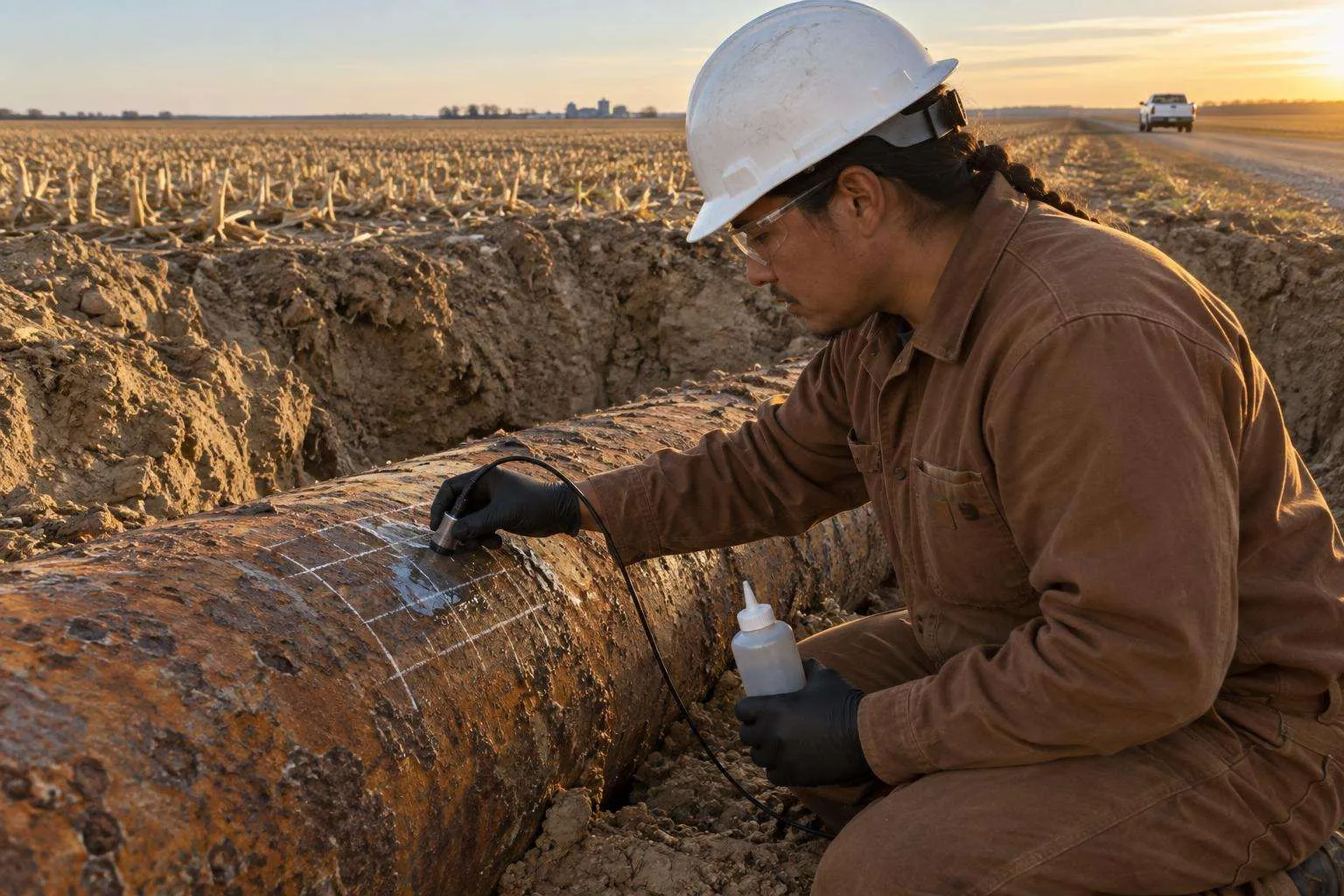
Mistake #5: Poor Surface Prep for Ultrasonic Testing
Dirt, grease, rust, and paint distort UT signals. Garbage in, garbage out.
Many firms rush surface preparation because it’s “not the inspection itself.” But it absolutely is part of the inspection.
What happens: Signal noise masks actual defects. False discontinuities appear. You end up with uncertain results that require follow-up testing and delay your project.
Real-world example:A technician showed up to inspect pipeline welds without cleaning the surface first. The rust and scale caused so much backscatter that the UT readings were unusable. They had to come back the next day, adding cost and delay.
How to prevent it:
- Specify surface prep requirements in the inspection scope
- Require photographic documentation of the prepped surface
- Have the technician sign off on surface condition before scanning begins
Mistake #6: Wrong Couplant or Probe Selection for the Job
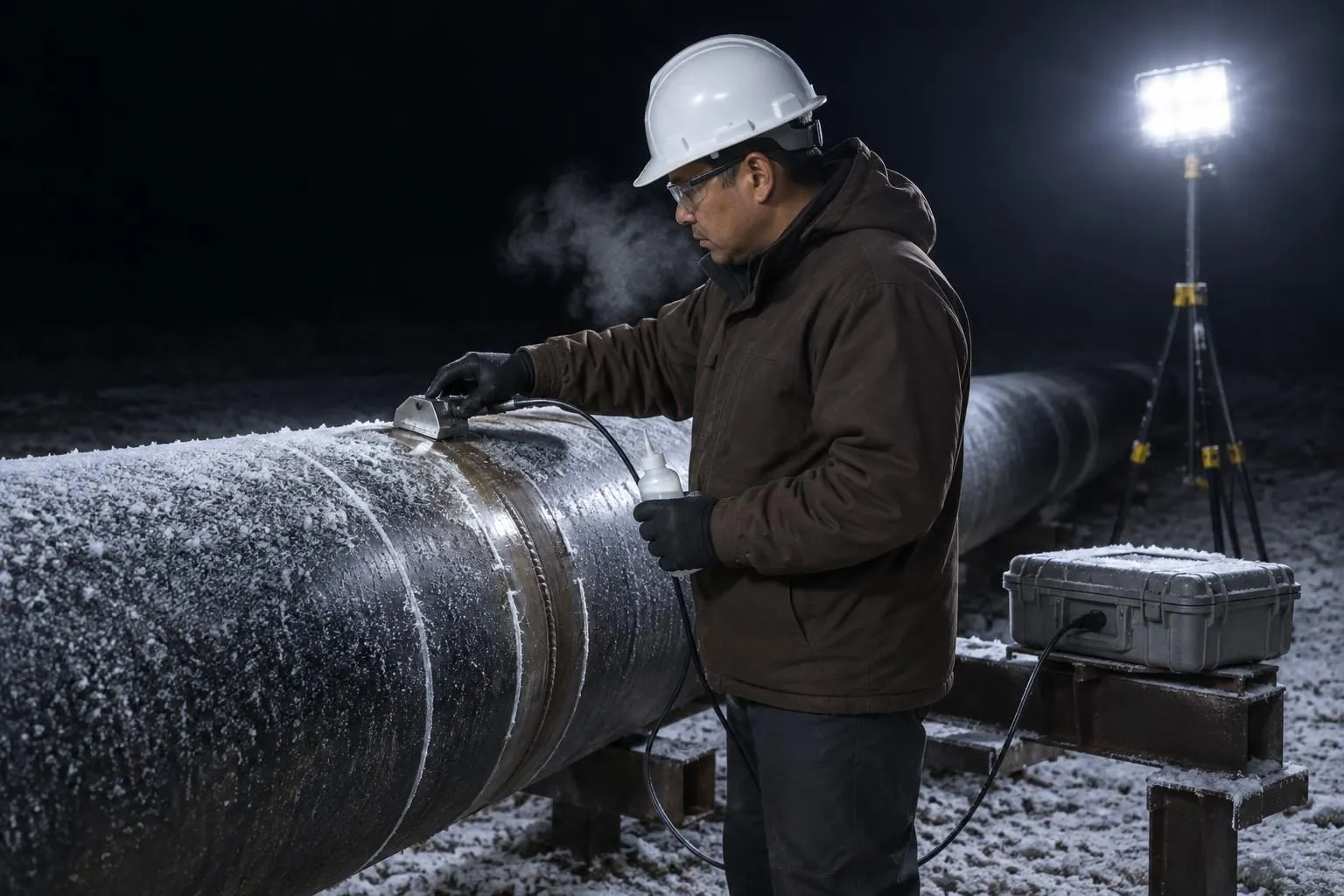
UT accuracy depends on selecting the right probe (by material, thickness, and frequency) and using the correct couplant type and amount.
Many technicians default to “whatever’s in the truck” instead of thinking through the application.
What happens: Poor signal penetration. Low resolution. Data that’s technically complete but practically useless.
How to prevent it:
- Document material properties, thickness, and inspection goals in the scope
- Have the technician confirm probe and couplant selection in writing before starting
- Require a test scan on a calibration block to verify settings
Mistake #7: Reporting Errors and Incomplete Documentation
This is where the training gap, manual processes, and lack of oversight converge.
Incomplete forms. Illegible handwriting. Missing technician credentials. No Level 3 sign-off. Reports that read like someone was typing in the dark.
What happens: Your QA team can’t validate the data. Your customer asks for clarification. Your auditor flags it as a non-conformance. Projects stall.
Real-world example:A shop received an RT report that listed “weld OK” with no actual discontinuity data, no technique sheet, and no Level 3 signature. They had to reject the report and request a redo—adding a week to their timeline.
How to prevent it:
- Use digital forms with mandatory fields (makes it impossible to skip sections)
- Require Level 3 review before any report leaves the site
- Standardize how discontinuities are documented (not free-text descriptions)
- Track reporting metrics: How often are reports rejected? Why?
Mistake #8: Ignoring Method-Specific Prep (Penetrant, MPI, Etc.)
Each NDT method has specific requirements that many firms downplay:
| Method | Common Mistake | Prevention |
|---|---|---|
| Liquid Penetrant (PT) | Using highest sensitivity regardless of discontinuity size needed; wastes time, adds cost | Match sensitivity to required flaw size; use minimum products (penetrant + developer only) |
| Magnetic Particle (MPI) | Excess particles in bath hide small defects | Maintain correct bath concentration; replace gradually, not all at once |
| Eddy Current (ET) | Wrong probe frequency for target depth | Select frequency based on material conductivity and inspection depth |
How to prevent it: Require the firm to document method selection and justify sensitivity/probe choices in writing before work begins.
Mistake #9: Lacking On-Site Level 3 Support for Immediate Verification
Many firms send Level II technicians to the job, then route all final calls back to an off-site Level 3 engineer. This creates delays and increases costs.
What happens: Technician finishes inspection, then waits for Level 3 review (which might take 24-48 hours). If there’s a question about a weld call, you’re stuck.
How to prevent it: Contract with firms that either:
- Have a Level 3 available on-site for critical jobs
- Guarantee Level 3 phone/video consultation within 2 hours
- Have written procedures for provisional acceptance pending Level 3 review
Practical Bottom Line
The gap between a mediocre NDT firm and a reliable one isn’t skill—it’s systems.
If you’re hiring an NDT firm:
- Ask about training, calibration cadence, and digital reporting
- Request references from aerospace/oil & gas clients (higher standards = better processes)
- Write these requirements into your contract
- Spot-check the first report against your checklist before you pay
If you’re running an NDT firm:
- Invest in comprehensive technician training—documentation matters as much as technique
- Shift to digital reporting today
- Calibrate frequently and document it
- Hire enough staff to prevent mid-job technician swaps
- Make Level 3 review a non-negotiable gate before any report leaves
For deeper context on choosing the right partner, check out our complete guide to NDT inspection firms.
The best insurance against costly failures isn’t buying the fanciest equipment. It’s hiring (or being) a firm that treats documentation, calibration, and technician consistency like they matter—because they do.
Done reading? Get quotes from NDT inspection firms near you.
Takes about a minute. Free, no obligation; providers reply to you directly.
Popular cities: