
Get free quotes from non-destructive testing services near you
Takes about a minute. Free, no obligation; providers reply to you directly.
I got the call at 2 p.m. on a Tuesday.
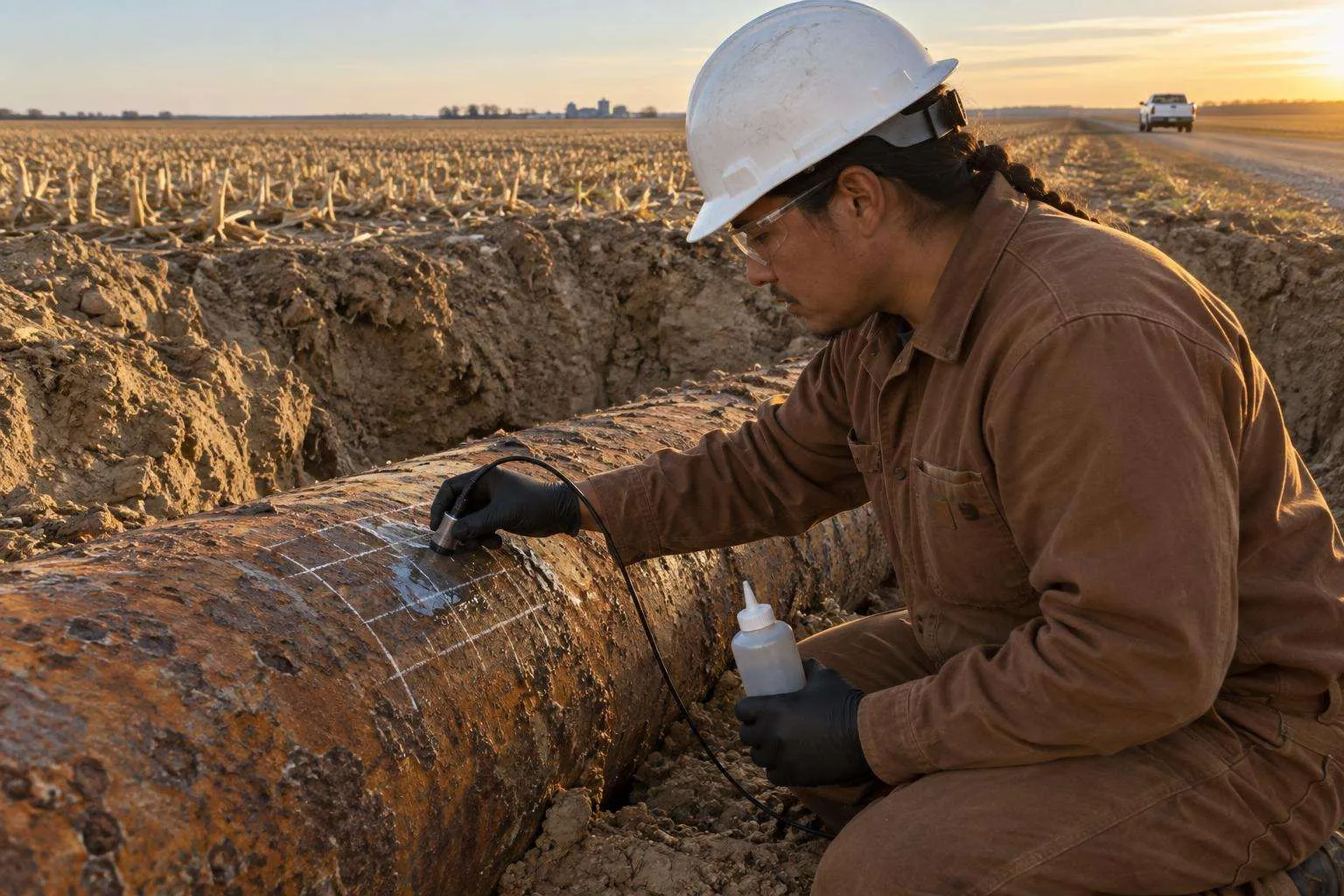
A facility manager in rural Nebraska needed an urgent ultrasonic inspection on a corroded pipeline section — the kind of job that should’ve been routine. Except when I started calling NDT firms for a quote, the numbers ranged from $8,500 to $22,000 for essentially the same scope of work. Same technique, same asset, same risk profile. The difference? One crew was driving four hours across flat farmland. The other had technicians already stationed nearby.
That’s when I realized: NDT inspection pricing isn’t just about what you’re testing. It’s about where you’re testing it.
The Short Version:NDT inspection costs in high-demand states like Texas, California, and the Northeast run 30–50% higher than rural or less-industrialized regions, driven by technician scarcity, regulatory intensity, and labor inflation. You can find competitive rates in emerging markets — but cheaper doesn’t always mean better.
Key Takeaways
- North America dominates 35% of the global NDT market, with the US alone worth $5.2 billion — and pricing power concentrates in oil & gas, aerospace, and infrastructure hubs
- Level III technician shortages are real: Rates for nuclear/aerospace experts have jumped 15–20% annually since 2023, with rural Midwest and Gulf Coast markets hit hardest
- Regional variation is steep: Expect 30–50% cost differences between Texas/California and lower-demand states, driven by crew availability and regulatory burden
- The services segment (79.2% of US NDT revenue) runs on labor, meaning technician wages, travel, and crew depth directly shape your invoice
Why Your State Matters More Than You Think
Here’s what most facility managers miss: NDT isn’t like ordering a part. You’re not paying for a widget — you’re paying for certified expertise traveling to your asset. And that expertise costs different amounts depending on whether you’re in downtown Houston or a rural county in Kansas.
The research shows North America charges a premium versus Asia-Pacific for NDT services, thanks to advanced tech and higher technician qualifications. But within North America, there’s another layer of variation that doesn’t get talked about.
The Three-Tier Cost Structure
Tier 1: High-Cost, High-Demand Markets (Texas, California, Gulf Coast, Northeast)
These regions drive the market. Texas alone is a gravity well for NDT work — shale inspections, deep-water assets, hydrogen pipeline programs. California brings aerospace and manufacturing. The Gulf Coast? Oil & gas integrity work is non-stop.
Problem: Every firm in these markets knows demand is strong. Level III technicians here command the highest rates. You’re also competing with every other facility manager in the region for the same crew availability.
Tier 2: Mid-Market Regions (Ohio, Illinois, Michigan, Indiana, upper Midwest)
These industrial heartlands have solid NDT infrastructure but face a specific pain point: technician shortages in rural areas. Wind farm inspections in North Dakota inflate costs because crews have to drive hard. Training centers near Indianapolis and Detroit help, but the talent pool is tighter than Tier 1.
Tier 3: Emerging/Lower-Demand Markets (rural South, Mountain West, secondary manufacturing regions)
Lower baseline costs, but here’s the catch: you may not find the specialty you need. A firm with strong ultrasonic capacity might not have Level III radiographic expertise. Travel distances are long. Response times are slow.
State-by-State Pricing Reality
Nobody publishes NDT rates by state — the industry doesn’t work that way. But here’s what the data actually tells us:
| Region | Estimated Hourly Rate Range | Project Markup | Primary Cost Driver |
|---|---|---|---|
| Texas (Houston, Dallas) | $220–$380/hr | 35–45% premium | Oil & gas demand, Level III scarcity, robotics adoption |
| Gulf Coast (Louisiana) | $210–$360/hr | 30–40% premium | Deep-water/shale ops, crew shortages, high-skill work |
| California (Bay Area, LA) | $230–$400/hr | 40–50% premium | Aerospace/defense, federal hydrogen funding, CoL |
| Northeast (NY, PA, CT) | $200–$360/hr | 25–35% premium | Infrastructure/power gen, aerospace, strong regulation |
| Ohio, Michigan, Illinois | $160–$280/hr | 10–20% premium | Manufacturing, some shortages in rural areas |
| Kansas, Nebraska, Iowa | $130–$220/hr | Baseline | Lower demand, travel surcharges common, crew scarcity rural |
| North Carolina, Georgia | $150–$250/hr | 5–15% premium | Growing manufacturing, moderate competition |
Reality check: These ranges assume standard UT/PT work with Level II technicians. Add 20–40% for Level III complexity (nuclear, aerospace, complex geometries). Travel time, equipment rental, and report turnaround compress or expand the final bill.
Reality Check:A $150/hour rate in rural Kansas sounds like a win until you realize the firm quoted a 6-week turnaround because they’ve got three other jobs queued. That’s not cheaper — that’s slow and expensive in disguise.
Why Costs Spike in Some States (And Not Others)
1. Technician Density and Certification
Texas and California have critical mass. Oil & gas, aerospace, and manufacturing clusters mean Level II and Level III techs live there. In rural markets, you’re either waiting for a crew to drive in or paying premium rates for someone to leave their comfortable position.
The BLS data shows quality control inspectors (a related field) earn ~$47,460/year nationally. But in high-cost states, that baseline salary is only part of the equation — firms are also bidding against each other, and technician retention costs spike.
2. Regulatory Intensity
Aerospace, nuclear, and oil & gas facilities in major hubs have tighter regulatory requirements. More compliance overhead = higher firm operating costs = higher rates passed to you.
ASME, API, and ASTM standards demand on-site expertise, and FAA/NASA standards in aerospace corridors are non-negotiable. Firms in these markets staff more aggressively to meet compliance windows.
3. Asset Concentration and Specialization
If you’re inspecting wind turbines in West Texas, there are firms that do only wind farm NDT. They’ve dialed it in. Pricing is competitive but optimized. If you’re in eastern Montana and need the same work, the nearest firm might be 200 miles away, and they charge travel.
4. Competition vs. Scarcity
Texas has 50 NDT firms. Rural Nebraska has three. Guess who has pricing leverage?
Where You Can Actually Save Money (And Not Get Burned)
Pro Tip:Emerging markets like North Carolina, Georgia, and upstate South Carolina are seeing legitimate demand growth without the California/Texas premium yet. If your asset allows 2–3 week turnaround, you can find Level II expertise at 15–25% below Tier 1 rates. The catch: verify credentials, check turnaround times in writing, and ask for references in your industry specifically.
The Midwest training centers near Indianapolis and Detroit are also pumping out new Level II talent. Crews there are hungry, rates are moderate, and they’ll move fast to build reputation.
One more thing: The research flagged that services dominate 79.2% of US NDT revenue. That’s your labor cost right there. What you can control: bundling. Firms offering integrated software (scheduling, data storage, analytics) with field work sometimes offer volume discounts. If you’ve got 4–5 inspections across the year, ask about retainer models instead of per-project invoices.
The Hydrogen Effect (It’s Real)
Federal hydrogen infrastructure funding is tilting rates upward in California, Texas, and the Northeast. New pipeline integrity programs = new demand = wage pressure on experienced techs. If you’re in those regions and can schedule work off-peak (late Q1, Q4), you might dodge a 10–15% premium.
Practical Bottom Line
-
Get three quotes minimum, and make sure they’re all bidding the same scope (technique, technician level, travel assumptions). A quote without travel cost listed is incomplete.
-
Ask specifically about turnaround time. A cheaper rate that takes 8 weeks isn’t cheaper when your facility goes idle.
-
Verify Level III availability. If a firm’s Level III person is booked out 4 months, that’s real — you’re either waiting or paying surge pricing.
-
Consider geographic arbitrage carefully. Rural rates are lower, but confirm the firm has done your specific type of inspection before. A UT specialist doesn’t translate to radiographic work.
-
Check the hub article — The Complete Guide to NDT Inspection Firms — for what to ask firms about their certifications, quality control, and insurance.
The Nebraska pipeline job? I ended up going with the mid-range quote from a firm with strong references in energy infrastructure. They weren’t the cheapest, but they had Level III experience with corrosion mapping, gave me a firm two-week turnaround, and included a written report template that my engineering team could use directly.
Cost per technician-hour wasn’t the number that mattered. Total project cost and credibility did.
Done reading? Get quotes from NDT inspection firms near you.
Takes about a minute. Free, no obligation; providers reply to you directly.
Popular cities: