
Get free quotes from non-destructive testing services near you
Takes about a minute. Free, no obligation; providers reply to you directly.
I watched a $2 million offshore platform nearly sink because someone missed a three-inch crack in a subsea pipeline. Not metaphorically — they found it during emergency repairs when seawater started pouring through a hairline fracture that visual inspection had somehow skipped. The inspection company had certified technicians. They had the right equipment. But they didn’t have the right method for that specific problem.
That moment taught me something most people learn too late: NDT inspection isn’t interchangeable. Neither are the firms that do it.
The Short Version
NDT inspection firms detect structural defects without destroying components — critical for oil & gas, aerospace, power generation, and infrastructure. The market’s worth $11.41 billion in 2025 and growing 8.7% annually. Hiring the right firm means matching your defect type to their technical capabilities, verifying certifications (ASNT Level II minimum for technicians), and understanding that pricing ranges from $150–$500/hour per inspector, with project totals typically $5,000–$50,000+ depending on scope, access, and location.
Key Takeaways
- The NDT inspection market is expanding rapidly — $11.41 billion in 2025, projected to hit $17.31 billion by 2030 — driven by aging infrastructure and stricter safety regulations.
- Not all NDT methods work for all problems; ultrasonic, radiographic, magnetic particle, and penetrant testing each excel in different scenarios.
- Certification matters more than you think: ASNT Level II technicians can execute inspections; Level III can develop procedures. A firm without Level III on staff is outsourcing your critical decisions.
- Pricing depends almost entirely on method, location, and access difficulty — expect $5,000–$50,000+ for industrial projects, not flat rates.
Why Most People Hire the Wrong NDT Firm (And Why It Costs Them)
Here’s what I kept seeing: companies call three inspection firms, get three quotes, pick the cheapest, and discover six months later that nobody was certified for the specific defect they were hunting.
The problem isn’t dishonesty. It’s that NDT is genuinely fragmented. A firm might nail ultrasonic testing for pipeline welds but have zero experience with aircraft composite inspections. Another might specialize in radiography for castings but struggle with the corrosion mapping required for subsea assets.
The industry standards don’t help clarify this. API and ASME tell you what to inspect and when. ASTM and ISO tell you how. But they don’t tell you which firm is actually good at the how.
Reality Check:The National Board of Boiler and Pressure Vessel Inspectors doesn’t rank NDT firms. Credentials are verified through ASNT (American Society for Nondestructive Testing) or ISO 9712, but individual technician certifications don’t guarantee firm-wide quality or specialization.
What NDT Inspection Firms Actually Do
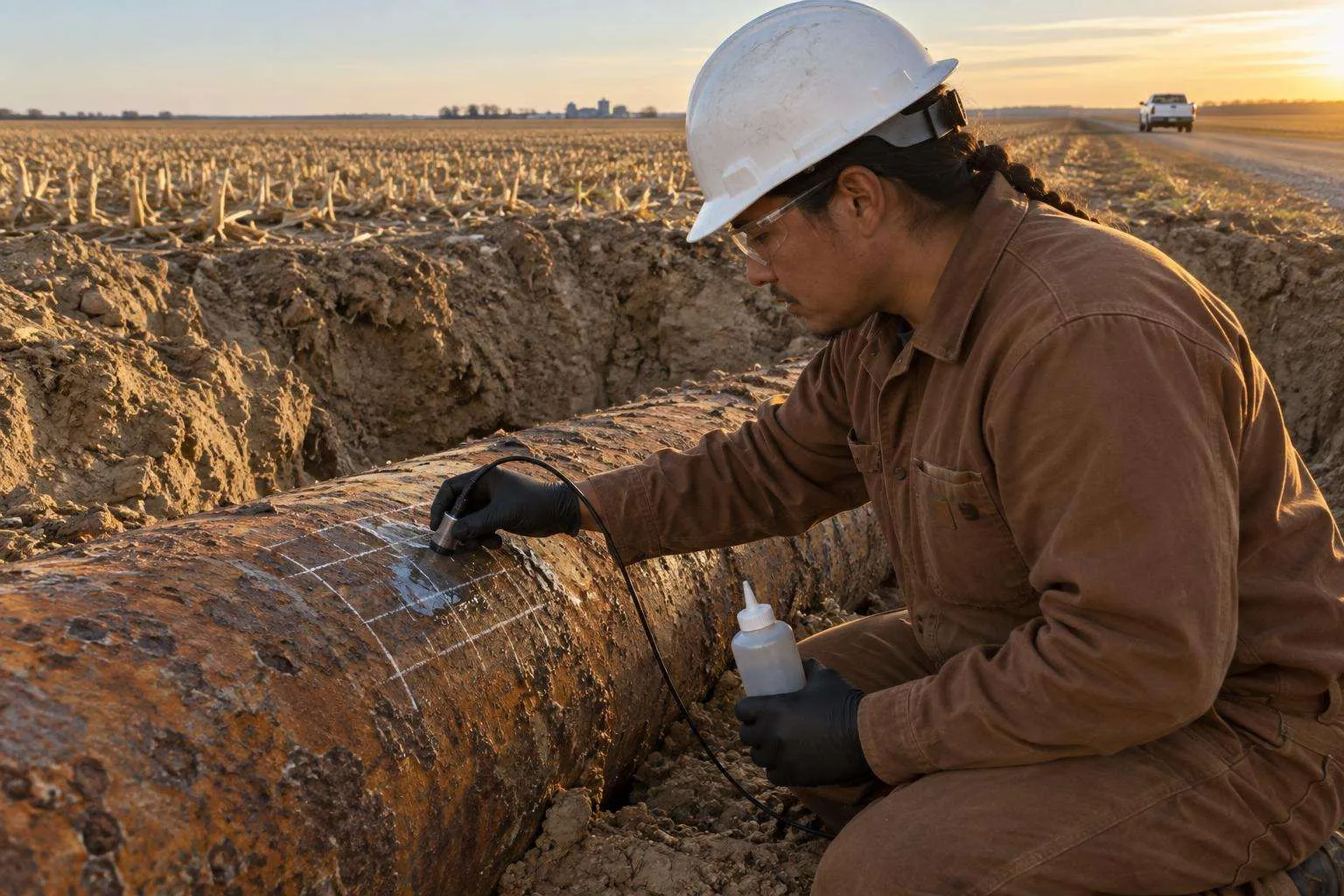
NDT stands for non-destructive testing — which means the inspection doesn’t damage the asset being tested. That’s the opposite of, say, cutting a pipe in half to see if it’s corroded inside (destructive testing). Non-destructive methods let you preserve the component and repeat inspections over time.
These firms operate across industries:
- Oil & Gas: Pipeline welds, subsea equipment, storage tanks, cathodic protection systems.
- Aerospace: Aircraft components, engine parts, composite structures, fastener integrity.
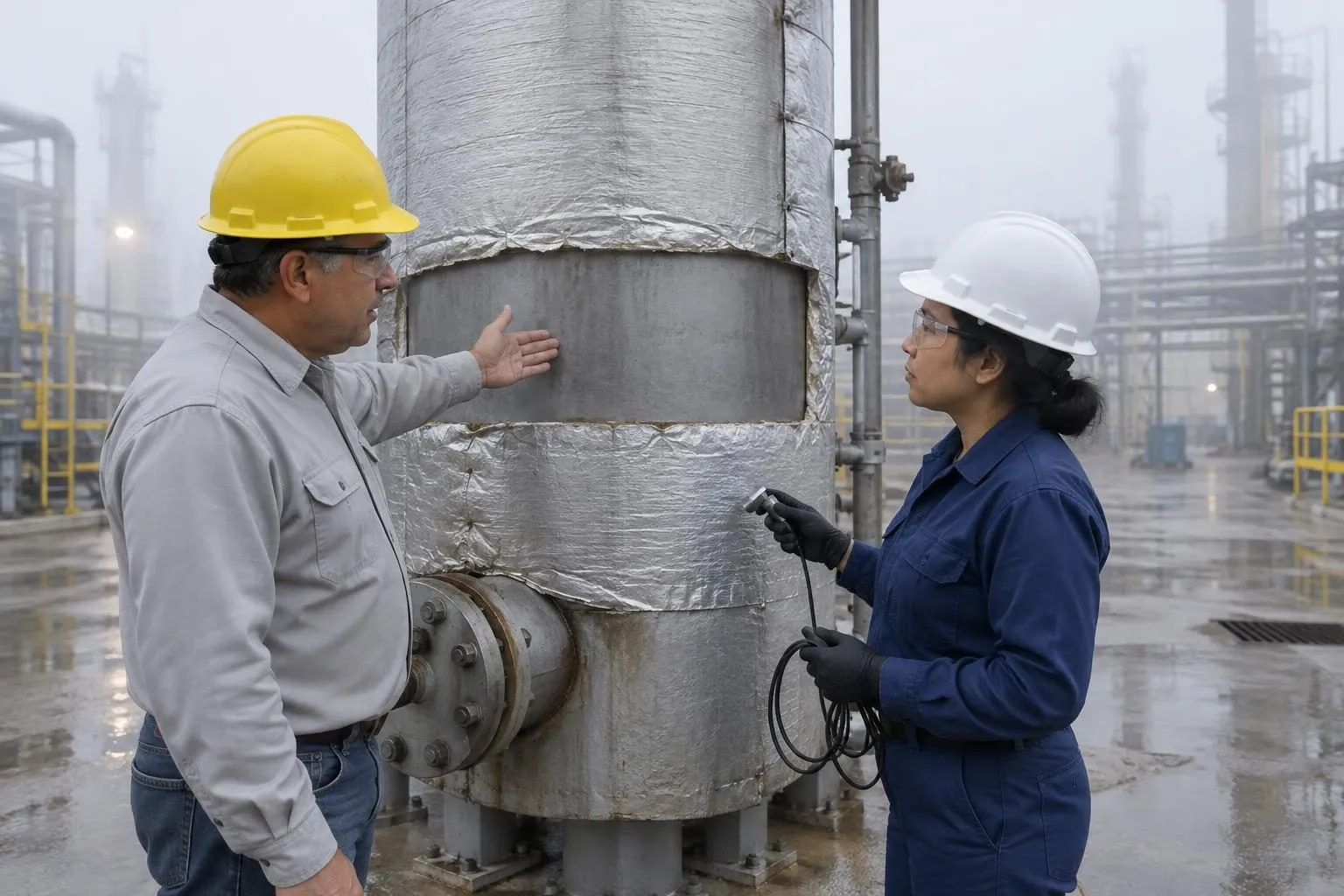
- Power Generation: Boiler tubes, turbine blades, pressure vessels, welds.
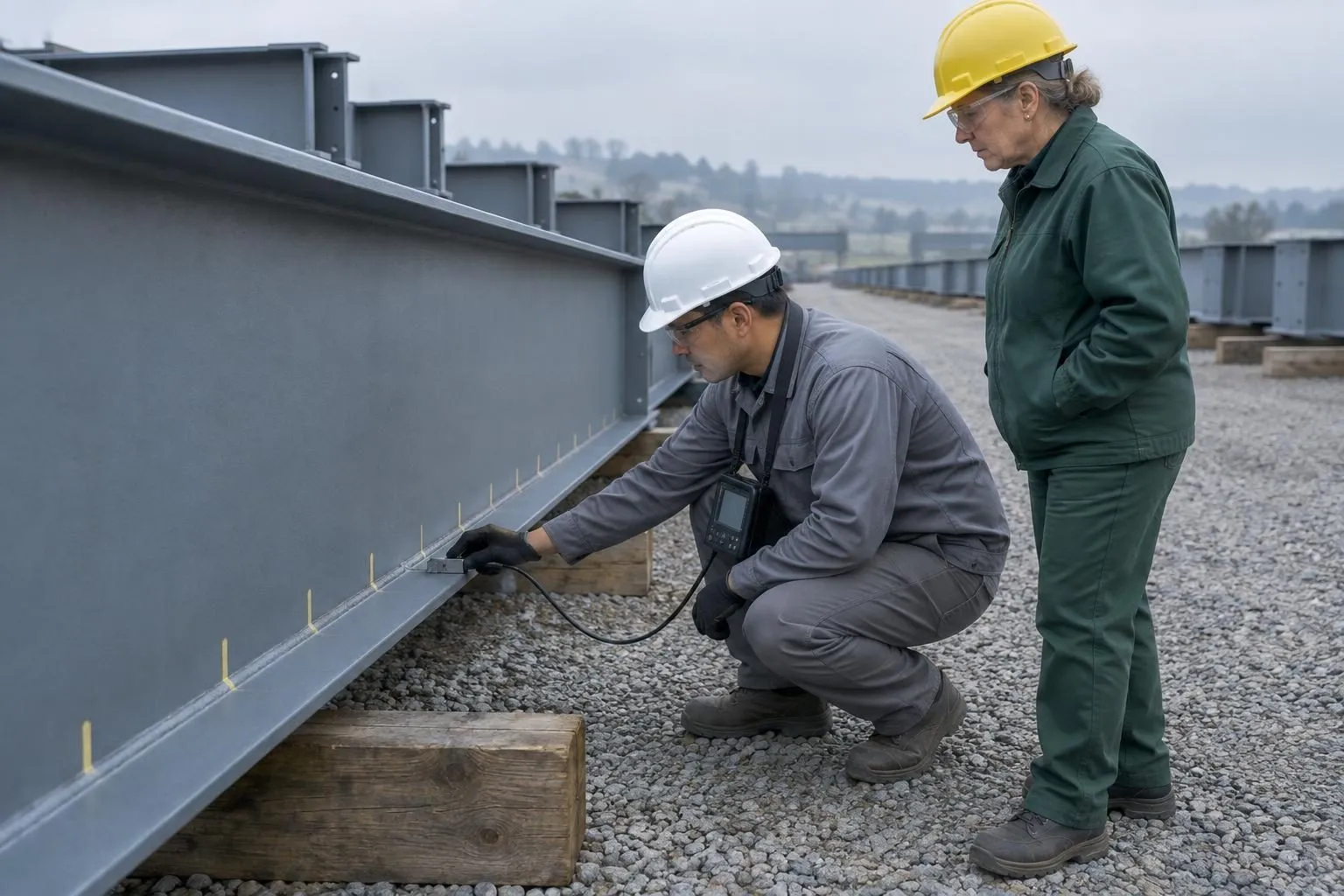
- Infrastructure: Bridges, tunnels, dams, building foundations.
- Manufacturing: Castings, forgings, welds, material defects.
- Nuclear: Reactor vessels, containment systems, high-reliability equipment.
- Maritime & Subsea: Hull integrity, propulsion systems, offshore structures.
The core service is always the same: find defects before they fail. The methods are different depending on what you’re looking for.
The Seven Main NDT Methods — And Which Firms Should Master Them
| Method | What It Detects | Best For | Limitations |
|---|---|---|---|
| Visual/Optical (VT) | Surface cracks, corrosion, deformation, alignment | Initial screening, post-weld inspection | Misses internal defects; requires line-of-sight |
| Ultrasonic Testing (UT) | Internal cracks, voids, thickness loss, lamination | Thick materials, welds, pipelines, vessels | Requires surface contact; material-dependent accuracy |
| Phased Array UT (PAUT) | Complex weld geometry, thin sections, high-speed scanning | Modern welds, critical pipelines, tubing | More expensive; requires specialized training |
| Magnetic Particle (MT) | Surface and near-surface cracks in ferromagnetic materials | Welds, forgings, castings (steel/iron only) | Won’t detect non-magnetic materials; messy cleanup |
| Liquid Penetrant (PT) | Surface-breaking defects in any material (metals, composites, ceramics) | Castings, forgings, composites | Won’t detect internal defects; surface preparation critical |
| Radiography (RT) | Internal voids, cracks, density changes | Castings, welds, thick sections | Radiation safety required; slower turnaround; expensive |
| Eddy Current (ET) | Surface and near-surface conductivity changes, cracks in conductive materials | Aircraft skin, fastener holes, tubing | Shallow penetration; thin materials only |
Nobody—and I mean nobody—is world-class at all seven methods. Pick a firm that dominates the method you need.
Pro Tip:When vetting a firm, ask which methods they use most frequently. If they’re equally strong at ultrasonic, radiography, and penetrant testing, they’re probably spreading themselves too thin. Specialists outperform generalists 9 times out of 10.
Certifications: Why ASNT Level II Isn’t Optional
Most industrial contracts require NDT technicians to hold an ASNT certification (American Society for Nondestructive Testing) or equivalent ISO 9712 certification. Here’s what the levels actually mean:
Level I: Can perform basic testing under supervision. Limited knowledge of equipment, technique, and interpretation. Think “they know enough not to break the equipment.”
Level II: Can set up equipment, perform inspections independently, prepare reports, and interpret results against industry standards. This is the operational backbone of any firm worth hiring.
Level III: Can develop NDT procedures, interpret standards, approve Level I/II work, and testify as an expert. If a firm doesn’t have at least one Level III on staff, they’re outsourcing critical decisions to a third party.
Certification requires:
- Documented hands-on training (typically 40–200+ hours depending on method)
- Written exams testing technical knowledge
- Practical demonstrations of proficiency
- Background verification and work history
The catch: certifications are per-method. A technician certified in ultrasonic testing is not certified in radiography. A firm that claims “we have 50 certified technicians” might have 45 who only do penetrant testing.
Reality Check:ASNT certification renewal requires documented continued training every three years. Ask your NDT firm when their team last renewed. If they can’t answer, they’re either not tracking it or hiding something.
How the Market Is Growing (And Why It Matters for You)
The NDT inspection market valued at $11.41 billion in 2025 is projected to expand to $17.31 billion by 2030 — a compound annual growth rate of 8.7%.
This matters because:
-
Capacity is tight. Growth is outpacing technician supply. Expect longer lead times and higher costs if you’re booking inspections 6–12 months from now.
-
Specialization is accelerating. Firms are investing in niche capabilities — drone-based inspections, AI-powered defect analysis, automated robotic systems for hazardous environments. Older firms that haven’t modernized are losing contracts to tech-forward competitors.
-
Geographic gaps are widening. Asia Pacific and Middle East regions are experiencing faster growth than North America. If you need inspections in these regions, DEKRA, SGS, and other multinationals have regional capacity; smaller domestic firms may struggle with logistics.
-
Automation is real, but not yet dominant. Drones and robotic systems are now standard for inaccessible areas (offshore structures, bridge undersides, interior pipeline surveys). But 80% of inspections still require human technicians on-site. This won’t change for another 5–10 years.
Real-World Examples: What Works at Scale
SGS (Large-scale oil & gas/power projects): Deployed phased array ultrasonic testing (PAUT), time-of-flight diffraction (TOFD), digital radiography, and drone-based inspections for major projects across Asia Pacific and the Middle East. Their advantage: integrated reporting and compliance with multiple international standards in one engagement.
DEKRA Industrial (May 2025 expansion): Expanded across Southern Europe, Middle East, and Africa with specialized rope-access inspection, corrosion mapping, and material testing. They hold ISO 45001:2018 (occupational health & safety) and DNV certifications for nuclear and maritime assets — which means they’re vetted for high-consequence industries.
Unique Group: Operates as a single-source provider for NDT tools, accessories, and field services. They specialize in offshore/subsea defect detection with purpose-built equipment like the ASAMS System 3 (corrosion monitoring) and Buckleys tools. Their model emphasizes field-ready support in harsh environments rather than certification breadth.
The pattern: larger firms win through integration (multiple methods, global reach, regulatory compliance). Smaller firms win through specialization (mastery of one method, deep industry expertise, faster response).
Pricing: What You’ll Actually Pay
Nobody quotes NDT inspection the way a cable company quotes internet service. There’s no standard rate card because the variables are too different:
- Method complexity: Radiography costs more than visual testing. Phased array ultrasonic costs more than conventional UT.
- Access difficulty: Inspecting a pipe in a plant costs less than inspecting subsea equipment or bridge undersides.
- Location: Urban inspections in major metros are cheaper (local labor). Remote or international locations add travel and logistical costs.
- Project scope: Large contracts (multiple locations, extended timelines) negotiate lower hourly rates than single-day inspections.
Typical ranges:
- Technician rate: $150–$500/hour (loaded rate including labor, equipment, overhead)
- Small project: $5,000–$15,000 (day-rate inspection, one location)
- Medium project: $15,000–$50,000 (multi-location, multiple methods, 1–2 weeks)
- Large industrial project: $50,000–$500,000+ (extended scope, remote access, high-consequence industries)
Pro Tip:Request a detailed scope of work estimate broken down by method, location, and travel time. A firm that gives you a flat number without detail is either inexperienced or sandbagging you.
How to Actually Hire an NDT Inspection Firm
Here’s the framework that works:
Step 1: Define your defect problem clearly. Don’t say “we need an inspection.” Say “we need to detect internal cracks in 2-inch carbon steel welds, suspect heat-affected zone cracking, no access above the pipe, outdoor location, ASME Section VIII compliance required.”
Step 2: Identify the method(s) required. Use the table above. If your problem matches multiple methods, ask the firm which they recommend and why. Their answer tells you whether they understand your problem or are just trying to fit you into their standard offering.
Step 3: Verify certifications.
- Request Level II and Level III certifications for the relevant method.
- Ask about the technician team’s experience (how many years, how many similar projects).
- Confirm they’re up-to-date on renewals (ask to see documentation).
Step 4: Check regulatory compliance.
- Are they compliant with relevant standards (API, ASME, ISO)?
- Do they have third-party accreditation (DNV, ABS, Lloyd’s for high-consequence industries)?
- Can they provide references from customers in your industry?
Step 5: Get detailed quotes from at least two firms. Compare them on method, deliverables (raw data vs. interpreted reports), timeline, and cost. The cheapest quote is rarely the best value.
Step 6: Establish reporting standards upfront. Ask: “What does your final report include? Raw images/data, written interpretation, compliance statement, recommendations for follow-up?”
Common Pain Points and How Good Firms Solve Them
Pain Point: Corrosion in harsh environments (subsea, high-temperature pipelines) is difficult to detect with standard ultrasonic methods.
Solution: Advanced methods like matrix array ultrasonic tomography (MAUT) for high-resolution imaging, or specialized firms like Unique Group that work specifically in offshore/subsea environments with purpose-built equipment and experience reading defects in complex geometries.
Pain Point: Precision is critical but human technicians make setup errors, leading to false positives or missed defects.
Solution: Phased array ultrasonic testing (PAUT) reduces setup variability. Couple that with AI-powered defect detection systems for additional accuracy. Leading firms (SGS, DEKRA) are integrating digital reporting and analytics.
Pain Point: You need rapid turnaround but inspections require site access that’s hard to schedule.
Solution: Firms with drone-based and robotic capabilities can inspect inaccessible areas (bridge undersides, interior pipelines, height-restricted zones) without long lead times for equipment setup.
Pain Point: Regulatory audits require documented evidence of inspection competence.
Solution: Firms with third-party accreditation (ISO 45001, DNV, API authorization) carry regulatory credibility. They also maintain detailed quality assurance records that satisfy auditors.
Future Trends: What’s Coming (And What’s Hype)
Automation and robotics: Drones and robotic crawlers are now mainstream for inaccessible inspections. Expect to see autonomous systems handling 30–40% of routine inspections within 5 years.
AI-powered defect detection: Computer vision and machine learning are improving defect classification. This won’t replace technicians (yet), but it will improve accuracy and reduce interpretation variability.
Digital integration: Expect NDT firms to move toward cloud-based platforms that log inspections, track asset history, and flag trending issues automatically. This ties into predictive maintenance workflows.
Specialized certifications: As industries evolve (composite aircraft, offshore wind turbines, battery manufacturing), NDT certification bodies are creating specialized credentials. Older firms that don’t pursue these will lose market share.
Remote inspections: Augmented reality tools now allow remote experts to guide on-site technicians in real time. This is game-changing for international projects and specialist shortages.
Practical Bottom Line
You need an NDT firm that:
-
Specializes in your specific defect type. Ask directly: “How many jobs like mine have you done?” If they hesitate, call the next firm.
-
Has Level III certification on staff for your method. This signals the ability to develop custom procedures and defend results in litigation.
-
Provides detailed, written scope of work before quoting. Vague estimates hide surprises.
-
Can articulate why they recommend a specific method rather than just offering their most-used approach.
-
Has third-party accreditation if you’re in a regulated industry (nuclear, aerospace, pressure vessels).
-
Gives you references from similar projects, not just happy-path case studies.
Start with Step 1 above: define your defect problem as precisely as you can. That single step eliminates half the mismatches that happen when hiring NDT firms.
For more on specific methods, see our deep dives on ultrasonic testing and phased array UT for welds. For industrial facility managers in specific regions, check out NDT inspection services near you.
Done reading? Get quotes from NDT inspection firms near you.
Takes about a minute. Free, no obligation; providers reply to you directly.
Popular cities: