
Get free quotes from non-destructive testing services near you
Takes about a minute. Free, no obligation; providers reply to you directly.
I watched a manufacturing plant manager spend $40,000 on a failed inspection last year because nobody on his team could answer a simple question: What’s the difference between the company they called and the one they should’ve called?
He’d hired what he thought was an NDT firm. What he got was a testing company that wanted to destroy samples to prove a point. By the time he realized his mistake, they’d already demolished half a batch of precision castings. The other half? Still sitting in a warehouse, unverified, because the destructive testing didn’t actually give him the full picture he needed.
That’s the conversation I want to have with you.
The Short Version:NDT inspection firms keep your parts intact while finding hidden flaws — perfect for ongoing maintenance and safety checks. Non-destructive testing companies that also do destructive testing serve a different purpose: proving failure points for design, research, or regulatory certification. If you’re in oil & gas, aerospace, or critical infrastructure, you need the first one regularly and the second one occasionally. If you’re in most other industries, the NDT firm is your bread and butter.
Key Takeaways
- NDT inspection firms preserve your assets while finding defects; testing companies often destroy samples to validate them — totally different animals
- You might actually need both, but only if you’re in critical industries like aerospace, oil & gas, or heavy manufacturing
- NDT costs less operationally ($150–$500/hr per technician, minimal downtime) but serves maintenance; destructive testing serves certification and design validation
- Mixing them up costs money, time, and sometimes safety credibility
Here’s What Most People Miss
The terms get used interchangeably. That’s the trap.
An “NDT firm” and a “testing company” sound like the same thing. They’re not. The distinction matters enough to shift your entire budget and your entire inspection strategy.
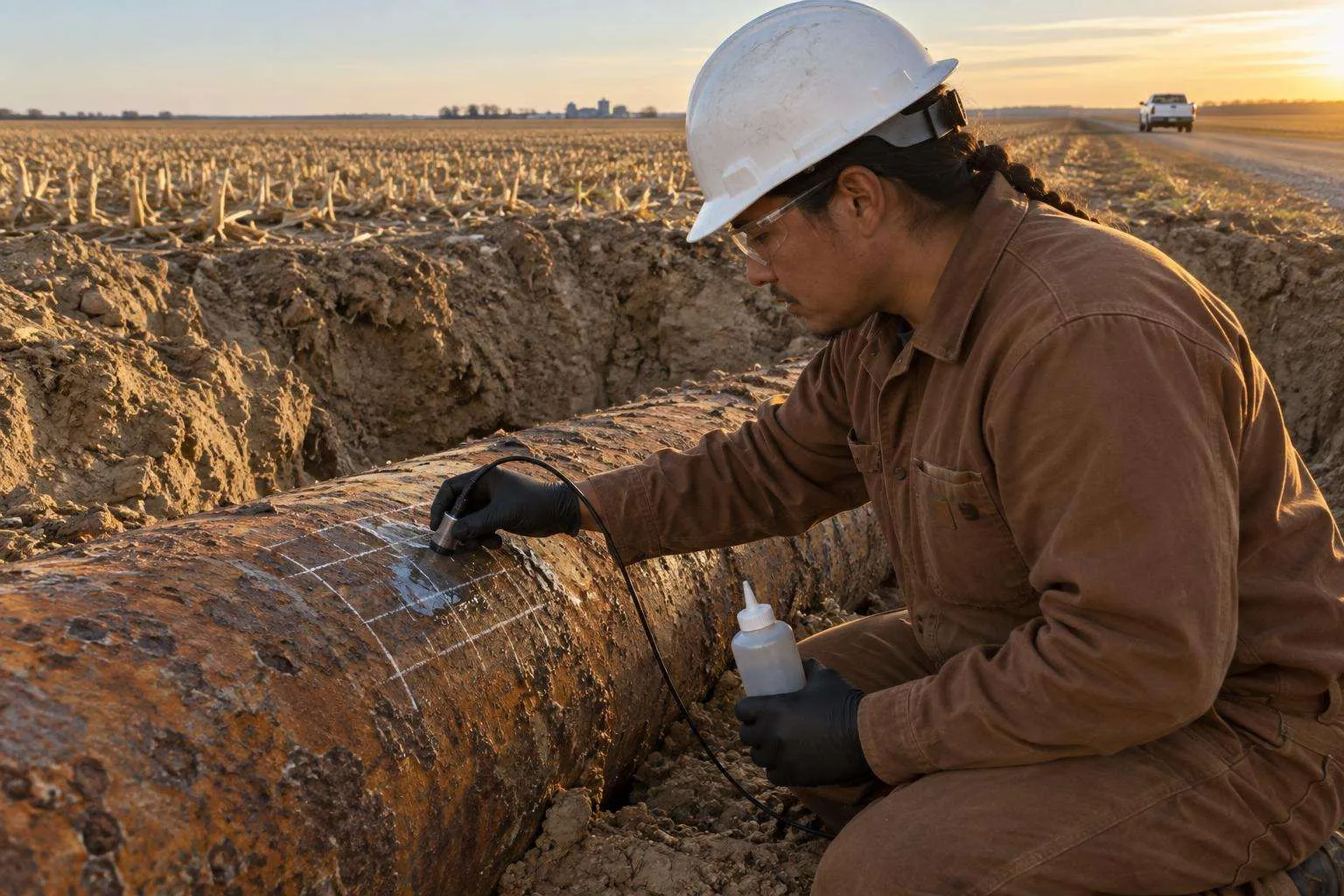
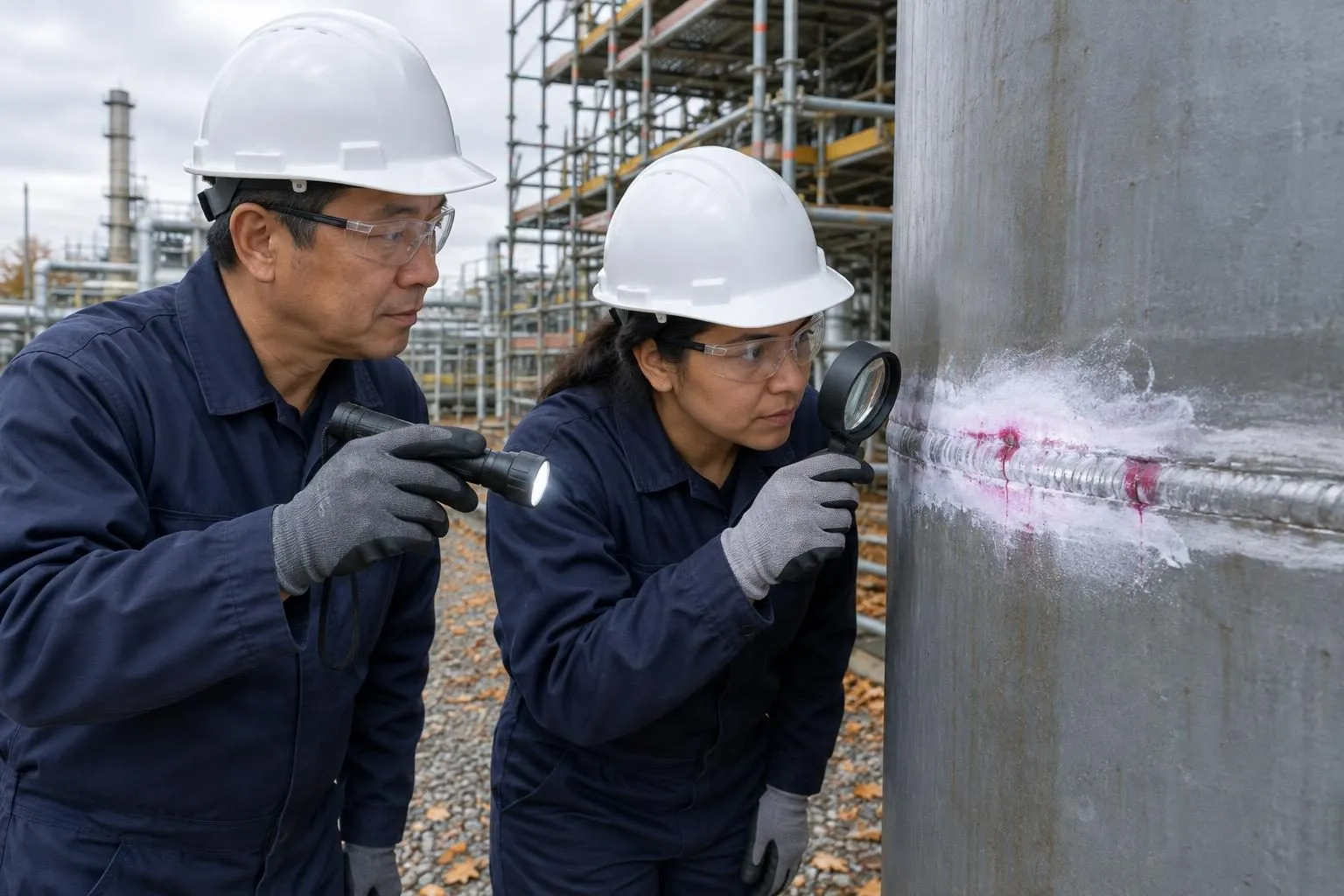
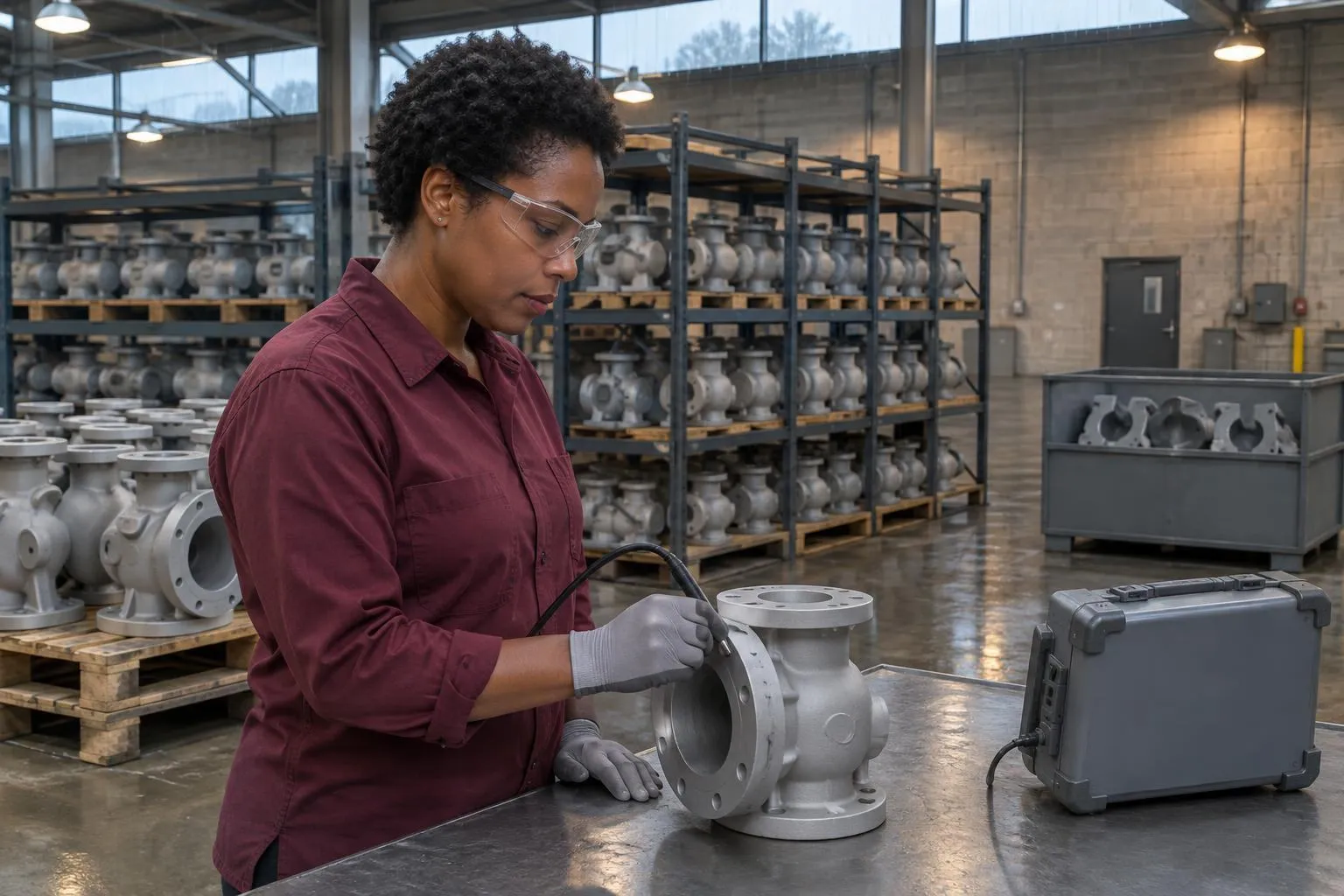
NDT inspection firms focus on one job: finding defects in components without damaging them. Ultrasonic testing, radiographic testing, magnetic particle inspection — the toolkit is designed to see inside your equipment while keeping it operational. These companies live in the maintenance and safety world.
Non-destructive testing companies that also do destructive testing are running a different business model. They’re certified to break things apart (literally) to understand why they fail. That’s DT — destructive testing. It’s the ASTM world, not the ASNT world.
Reality Check:Most industrial professionals assume NDT and DT are on a spectrum. They’re not. They answer different questions. “Is this pipeline safe to operate?” is NDT. “At what pressure will this new alloy fail?” is DT. Mixing them up is like calling a cardiologist when you need a surgeon — both are doctors, but the job is entirely different.
The real problem: When you need only NDT (maintenance, safety validation, quality assurance on in-service assets), hiring a company that wants to also sell you destructive testing is like going to a tire shop that keeps suggesting you need an engine rebuild. They’ll find reasons to destroy things.
The Core Difference: What Each Does (and Doesn’t)
| Aspect | NDT Inspection Firm | Testing Co. (DT Included) |
|---|---|---|
| Primary Purpose | Detect defects while keeping components intact | Destroy samples to determine failure points |
| Best For | Maintenance, safety checks, in-service assets, quality assurance | Research, design validation, certification, failure analysis |
| Component Status Post-Test | Operational and ready to use | Destroyed / unusable |
| Cost Model | Lower operational costs; no material replacement | Higher costs; includes destroyed inventory |
| Downtime Impact | Minimal; on-site, real-time testing | Extended; requires sample prep and lab analysis |
| Technician Certification | ASNT (American Society for Nondestructive Testing) Level I/II/III or ISO 9712 | ASTM (American Society for Testing and Materials) certified |
| Detection Capability | Subsurface flaws: cracks, porosity, voids, delamination | Precise failure points, material property limits |
| Industry Adoption | Oil & gas, aerospace, power generation, infrastructure, manufacturing | Aerospace (initial design), research labs, certification bodies |
When You Actually Need Both (And When You Don’t)
Let’s be direct: Most companies need an NDT firm and will never need a destructive testing company.
You need ongoing NDT if:
- You operate critical infrastructure (pipelines, power plants, aircraft)
- You manufacture high-value components that must remain in service
- You’re required to document safety compliance (ASME, API, FAA standards)
- You can’t afford unplanned downtime or catastrophic failure
This is Quaker City Castings’ use case. They run production facilities where components need validation while in service. NDT gives them immediate results without halting operations or destroying inventory. Cost per technician? $150–$500/hour. But the savings from avoiding material loss and downtime? Multiples of that.
You need destructive testing only if:
- You’re designing a new product and need to know exactly where it breaks
- You’re a research facility or materials lab validating new alloys or processes
- You’re certifying new equipment for regulatory bodies (FAA, API, etc.)
- You’re investigating a catastrophic failure and need forensic evidence
Most mid-market manufacturers never hit this scenario. And when they do, they contract with a specialized DT lab, not their maintenance NDT provider.
Pro Tip:If someone’s pitching you destructive testing for routine quality assurance, they’re solving the wrong problem. That’s a sales move, not a technical one. NDT detects subsurface flaws — cracks, porosity, voids — just as effectively for ongoing operations, and your parts stay in the game.
The Real Cost Conversation
This is where the confusion creates actual financial damage.
NDT is cheaper operationally because:
- No material waste (components stay intact)
- No replacement inventory costs
- Minimal downtime (technicians come on-site, test in real-time, you keep operating)
- Faster turnaround (hours, not days)
A typical NDT project runs $5,000–$50,000 depending on scope and access. That includes technician labor, equipment, and reporting. Your plant keeps running.
Destructive testing is more expensive upfront because:
- You’re destroying samples (material loss)
- Lab prep and analysis take longer
- Extended downtime (batch testing, not in-service)
- Replacement inventory requirements
If you’re running a manufacturing operation and you’re doing DT on every batch of production components, you’re hemorrhaging money. That’s not an inspection strategy — that’s a budget problem.
Reality Check:One oil & gas integrity engineer told us NDT dropped their operational costs by 30% compared to a destructive testing regime. The reason? No halted operations, no destroyed inventory, lower technician hours per component. The gap widens in critical industries where downtime literally costs six figures a day.
How to Know Which One to Call
Ask yourself three questions:
1. Does this component need to stay in service after testing? Yes = NDT firm. No = You might need destructive testing (or both).
2. Are you trying to detect hidden defects or prove where something breaks? Hidden defects = NDT. Prove failure points = DT.
3. Are you doing this for safety/compliance or research/certification? Safety/compliance = NDT. Research/certification = DT.
If you answered NDT for #1, you’re done. Call an ASNT-certified NDT firm. If you answered “both” or “DT,” you need someone with dual capability — and you should verify they’re actually certified for both (ASNT and ASTM standards).
Vegas Consulting’s approach is worth noting here: They start with NDT to detect defects, then extend into NDE (Nondestructive Evaluation) to assess how those defects impact performance and lifespan. That’s the sweet spot for critical assets — you get detection and impact analysis without destroying anything.
Practical Bottom Line
If you’re in manufacturing, energy, aerospace, or infrastructure, your immediate next step is finding a solid NDT inspection firm for your region. The screening questions:
- Are technicians ASNT Level II/III certified (or ISO 9712 equivalent)?
- Can they do on-site testing without moving your components?
- Do they have experience in your specific industry?
That firm becomes your maintenance partner. You use them regularly — every inspection cycle, every safety compliance check, every time you need subsurface defect detection.
If you’re also designing new products, validating new materials, or need forensic failure analysis, then you contract a specialized destructive testing lab. But that’s occasional, not routine.
Don’t let someone convince you that you need both for routine operations. You don’t. That’s a sales conversation, not an engineering conversation.
For the full strategic picture on choosing and vetting NDT providers, check out our complete guide to NDT inspection firms.
The manager I mentioned at the start? He recovered by switching providers mid-year. He lost money on the mistake, but he learned the difference. You don’t have to make that call.
Done reading? Get quotes from NDT inspection firms near you.
Takes about a minute. Free, no obligation; providers reply to you directly.
Popular cities: