

Get free quotes from non-destructive testing services near you
Takes about a minute. Free, no obligation; providers reply to you directly.
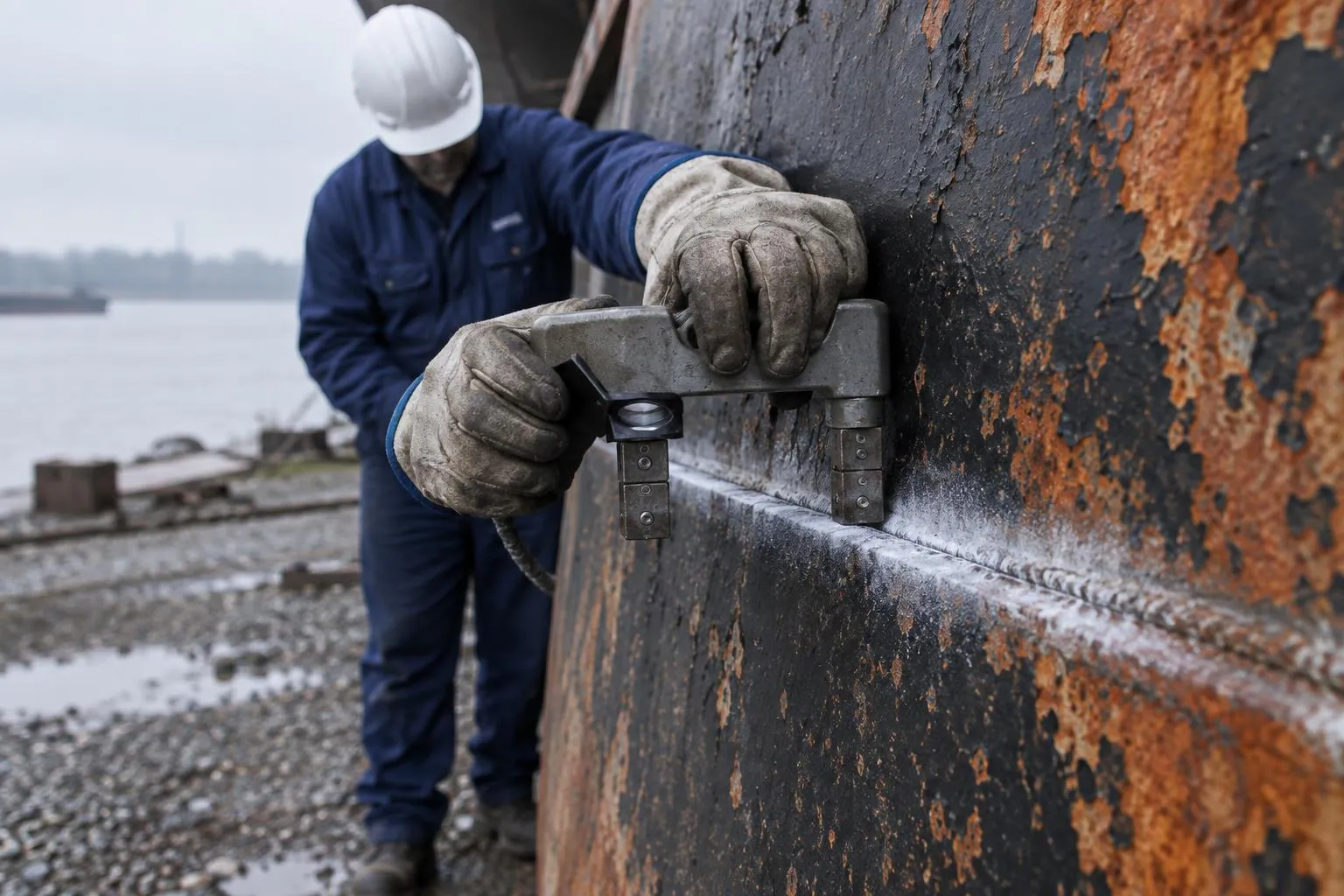
A contractor I know hired an NDT firm to inspect a fleet of aging barges. The inspection report came back clean. Three months later, Coast Guard enforcement found structural defects the firm had somehow missed—the kind that should have triggered immediate “NO SAIL” orders. The contractor got cited. The NDT firm? Gone to answer questions to their insurance company. Nobody tells you that a cheap inspection is infinitely more expensive than a thorough one until you’re the one writing the check for non-compliance penalties.
Hiring the wrong NDT inspection firm doesn’t just mean wasted money on a bad report. It means potential safety risks, regulatory violations, and liability exposure that can linger for years. But the market makes it easy to stumble: 78 NDT technician job openings in a single Texas locale suggest the talent pool is deep—and uneven. Not all certifications are real. Not all firms care equally about catching what matters.
Here’s what goes wrong when you don’t look closely enough—and how to spot trouble before it costs you.
The Short Version:Verify certifications directly with issuing bodies (ASNT, BINDT, ISO 9712), not just by looking at a resume. Ask about compliance history and safety protocols before booking. If a firm quotes dramatically below market rates ($150–$500/hr per technician is typical), that’s usually a symptom, not a bargain.
Key Takeaways
- Unverified certifications are the #1 red flag; fake credentials lead directly to missed defects
- Firms under schedule pressure often skip critical checks (vents, piping, valves on pressure vessels)
- Low-cost outliers rarely stay in business—what you’re saving upfront becomes a liability problem later
- Compliance history matters; ask for audit records and enforcement backgrounds before hiring
Red Flag #1: Unverified or Lapsed Certifications
This is the easiest red flag to miss because it looks legitimate on paper.
A technician’s resume says “ASNT Level II, UT certified.” You nod. You move on. The inspection happens. A defect is missed. Then you call ASNT to verify, and it turns out the certification lapsed two years ago—or never existed at all.
Why it matters: NDT is a credentialing profession, not a self-taught one. A Level I technician can follow procedures. A Level II can interpret results and troubleshoot equipment failures. A Level III can write procedures and train others. Miss that distinction, and you’re paying for expertise you don’t actually have. Worse, when regulators (like the U.S. Coast Guard during PVCT inspections on vessels 30+ years old) audit your documentation, they’ll cross-check those credentials. Non-compliance gets logged. You get cited.
What to do: Don’t accept a photocopy of a certificate. Call the issuing body directly—ASNT, BINDT, or the relevant ISO 9712 authority in your region. Confirm the certification is active, the tech’s name matches, and the method (UT, RT, MT, PT, ET, VT) covers what you need inspected. Ask the NDT firm to provide this verification before the contract is signed. Any firm that hesitates is telling you something.
Reality Check:Fake certifications are more common than most facility managers assume. A firm that can’t or won’t verify credentials in writing is one that doesn’t want scrutiny.
Red Flag #2: No Clear Safety Protocol or Pressure to “Just Get It Done”
I’ve seen this play out in the field: a technician spots a flaw—say, a crack in a weld or missing inspection tags—but the project manager is breathing down their neck because the client wants results yesterday. So the tech documents it quickly, mentions it in passing, and moves on.
Then nobody acts on it. The report buries the finding. By the time the client notices, the defect has gotten worse.
Why it matters: NDT inspections often uncover problems that require immediate action—especially on safety-critical systems. A structural defect on a bridge, a pressure vessel with thinning walls, piping with corrosion. These aren’t “nice to know” findings. They’re “stop operations until this is fixed” findings. If a firm treats them as checkbox items, you have a liability chain that runs directly back to you.
What to do: Ask the NDT firm about their safety-first process during the contract phase. Specifically:
- How do they handle critical findings? (Immediate written notification, supervisor alert, documented chain of custody)
- What codes or standards do they reference? (ASNT SNT-TC-1A is the industry baseline for ethics; ISO 9712 for international work)
- Can they walk you through a scenario where they had to halt an inspection because of a safety concern?
If the answer is vague, or if they seem to focus on “speed of delivery,” keep looking.
Pro Tip:A firm that treats safety findings casually will also cut corners on routine checks—missing vents, skipping piping inspections, glossing over valve seals. The same mindset that rushes critical findings rushes everything.
Red Flag #3: Dramatically Low Pricing
The market rate for NDT services sits between $150–$500 per technician hour, depending on certification level, travel, and complexity. A full pressure vessel inspection can run $5,000–$50,000+ depending on scope and access.
When you see a quote that’s 40–50% below that range, the question isn’t “How did they beat the market?” It’s “What are they skipping?”
Why it matters: You can’t run a compliant NDT operation on bargain pricing. Equipment costs money. Continuing education costs money. Liability insurance costs money. If a firm is dramatically undercutting the market, they’re either cutting corners on quality, running on borrowed time, or both. And when things go sideways—when a defect is missed and regulators start asking questions—you’ll discover they also cut corners on documentation, insurance, and background vetting.
What to do: Get three quotes. If one is significantly lower than the other two, ask why. Ask about their overhead, their equipment inventory, their technician-to-project ratio. If the explanation doesn’t make sense, that’s your signal. Also check their compliance history: ask if they’ve ever had enforcement actions, citations, or unresolved complaints. A firm operating below-market rates often has a history to match.
Reality Check:The cheapest bid usually isn’t the cost—it’s the down payment on a future problem.
Red Flag #4: Incomplete Inspection Checklists (Missing Critical Components)
Coast Guard PVCT inspections require checking vents, piping, valves, and structural integrity on vessels 30+ years old—every 10 years. Miss one category, and you’ve failed the audit. But firms sometimes skip steps under schedule pressure or to reduce cost.
You request an inspection. The report comes back. Structural seals are documented. Welds are tested. But piping and vents? Noted as “inaccessible” or “not applicable.” Then the Coast Guard inspection finds deficiencies in those exact areas, and you’re looking at “NO SAIL” orders—which means your vessel sits until it’s corrected.
Why it matters: A partial inspection is worse than no inspection, because it gives false confidence. You think you’re compliant. You’re not. The gap between what you checked and what regulators require becomes your liability.
What to do: Before hiring, get a copy of the firm’s standard checklist for your asset type. Ask them to walk you through it. If it maps to the relevant standard (ASME for pressure vessels, API for pipelines, ASTM for materials), and covers every system you need, you’re good. If there are gaps—or worse, if they seem unclear about what needs checking—that’s a firm that needs to stay on the bench.
| Inspection Type | Critical Components | Red Flag if Missing |
|---|---|---|
| PVCT (Pressure Vessel Cargo Tank) | Structural integrity, welds, vents, piping, valves, seals | Any one category = audit failure |
| Pipeline | Corrosion pitting, thickness, joint integrity, coating | Thickness data = compliance gap |
| Bridge or Structure | Fatigue cracks, weld defects, load-bearing members | Welds = safety risk |
| Tank Farm | Bottom integrity, wall thickness, internal corrosion | Bottom = structural risk |
Red Flag #5: No Documented Compliance or Enforcement History
This one requires a bit of digging, but it’s worth it.
Ask the NDT firm: “Have you ever had a compliance audit, citation, Report of Violation, or enforcement action?” Listen to how they answer. If they say “No, never,” follow up by asking for written documentation or permission to verify with relevant authorities (USCG for marine, OSHA for industrial, state regulators for facility-specific work).
Why it matters: Every firm gets audited at some point. What matters is how they responded. A firm with a citation that they corrected and documented has learned something. A firm that dodges the question or claims a spotless record (on a profession that spans decades) is either lying or hasn’t been scrutinized yet. Either way, that’s risk.
What to do: Include compliance history verification in your RFP. Ask for:
- Copies of audit reports from the last 3–5 years
- Any citations or Reports of Violation (ROV), and how they were resolved
- Insurance certificates proving active liability coverage
- References from clients in regulated industries (oil & gas, aerospace, marine)
A transparent firm hands this over without hesitation. A firm that delays or deflects is showing you their risk profile.
Pro Tip:Call one of their references yourself—don’t just read the testimonial letter they provide. Ask: “Did they catch what you expected them to catch? Were they responsive when you had a follow-up question?”
Red Flag #6: Technicians Without Problem-Solving Skills Under Pressure
NDT often means troubleshooting on the fly. Equipment fails on a complex shape. A sensor isn’t getting clean signal through thick material. The access point is tighter than expected. How the firm responds separates competent from just-certified.
A technician who panics, calls a supervisor, and waits for permission is eating your timeline and your money. One who stops, thinks, troubleshoots, and adapts—and documents the process—is worth the rate.
Why it matters: Real-world inspections never go exactly as planned. The asset is older, or dirtier, or more complex than the spec sheet suggested. If your NDT firm has technicians who only know how to follow one procedure, they’ll either miss the problem or blow your budget rescoping the work.
What to do: During the hiring process, ask for a demonstration. Give them a curveball scenario: “Your ultrasonic sensor isn’t getting a clear reading on a corroded pipeline section. Walk me through how you’d troubleshoot that.” Listen for:
- Systematic thinking (check the equipment, check the surface prep, check the settings)
- Backup plans (What if this method doesn’t work? What’s Plan B?)
- Documentation mentality (How would you log this decision for the final report?)
If they can articulate that kind of thinking, they’re professionals. If they shrug and say “I’d call my supervisor,” that’s a red flag.
Red Flag #7: No Clear Travel, Scheduling, or Availability Policy
NDT is a field business. Your inspection might require the tech to be on-site for a week, or travel across multiple locations. But some firms don’t have a clear policy about availability, backup technicians, or what happens if their primary contact gets sick.
You schedule an inspection for next month. One week before, they tell you their only available technician just took another job. You scramble. Your timeline slips. Your asset sits uninspected while regulators are watching.
Why it matters: Availability and backup capacity are part of reliability. A firm without redundancy is a firm that might not show up when you need them most.
What to do: Ask about staffing in the contract phase. Specifically:
- How many certified technicians do you have for my region?
- What’s your availability window for emergency or urgent inspections?
- If your primary tech isn’t available, who’s the backup?
- What’s your travel policy? (Do you cover lodging? Can the tech work solo, or do you require a team for certain asset types?)
Get this in writing. Include backup scheduling language in your SOW (Statement of Work). If a firm can’t commit to clear terms, they’re admitting they don’t manage their capacity well.
Practical Bottom Line
Hiring the right NDT firm comes down to three actions:
1. Verify everything upfront. Call ASNT. Check the compliance history. Get references and call them. Ask for insurance and audit records. This takes 2–3 hours of your time and saves months of headaches.
2. Build the contract clearly. Define the scope, the standards you’re following, the checklist they’ll use, the timeline, the backup plan, and what “critical findings” means in your context. Vague contracts breed vague inspections.
3. Trust your skepticism. If a quote feels too low, it is. If a firm can’t answer basic questions, they don’t know their business well enough. If they pressure you on speed, they’re optimizing for the wrong thing. You’re hiring them to find problems—make sure they’re actually looking.
For a deeper dive into how to build your overall NDT strategy, check out The Complete Guide to NDT Inspection Firms. And if you’re in a specific industry—marine, oil & gas, aerospace—the standards and timelines differ. Start there, then use this checklist to vet whoever you’re considering.
Your next inspection shouldn’t be a surprise. Make sure the firm you hire is looking in the right places.
Done reading? Get quotes from NDT inspection firms near you.
Takes about a minute. Free, no obligation; providers reply to you directly.
Popular cities: