
Get free quotes from non-destructive testing services near you
Takes about a minute. Free, no obligation; providers reply to you directly.
I walked into my first major manufacturing contract convinced I’d found the perfect inspection firm. Their website looked professional. They had certifications listed. Their quote was competitive.
Three months later, I’m staring at inspection reports that contradict each other, a technician who clearly doesn’t understand the difference between ultrasonic and radiographic testing, and a compliance nightmare that nearly tanked our safety audit. Turns out, certifications on a website and actual competence aren’t the same thing.
That’s when I learned: choosing an NDT inspection firm is where most companies get lazy—and where that laziness costs them tens of thousands in rework, liability exposure, or worse.
The Short Version:Hire certified inspectors (ASNT Level III minimum for your specific method), verify their experience with your exact asset type, and always check references. One-stop shops with 24-48 hour turnaround and transparent quarterly reviews will save you money long-term. Skip the firm that can’t clearly explain which method they’re using and why.
Key Takeaways
- Certification matters, but which certification matters more—API 510/570/653 for petrochemical, ASNT Level III for your specific method, and quarterly stewardship reviews are non-negotiable
- Unqualified inspectors (the real villain) misunderstand codes and miss defects; you catch it through reference calls and on-site audits, not marketing materials
- Method selection—ultrasonic, radiographic, eddy current, visual—depends on your defect type and asset geometry; firms that ask clarifying questions before quoting are the ones to trust
- Comprehensive providers handling multiple services under one roof typically deliver faster (24-48 hours for projects under 100 pieces) and cheaper than juggling separate vendors
The Problem Nobody Tells You: Certification ≠ Competence
Here’s what trips up most facility managers: NDT firms all claim certifications. ISO 9001, ASNT Level III, API credentials—they’re posted everywhere.
What nobody says out loud is that certifications are a floor, not a ceiling. The industry standard is clear: inspector reliability hinges entirely on whether that person actually understands the codes and methods they’re supposed to be using. One bad inspector on your team, and you’re looking at missed cracks, welding inconsistencies, or casting defects that escalate into safety issues or production shutdowns.
The real question isn’t “do they have the certificate?” It’s “can they explain why they’re using ultrasonic testing for this application instead of radiography?”
Reality Check:Quality Magazine identified the root cause of defect detection failures: inspectors who misunderstand the method they’re certified to use. The fix isn’t more certifications—it’s verifiable proof that your inspectors can communicate client requirements, perform on-site correctly, and accept quarterly stewardship reviews without push-back.
The 5 Questions to Ask Before You Hire
Before you sign anything, these are the non-negotiable conversations:
-
“What certifications do your inspectors hold for THIS specific method, and can you provide proof they’re current?” — Ask for ASNT Level III certifications for the exact testing method you need (ultrasonic, radiographic, eddy current, etc.). Don’t accept “Level II is fine” unless your specs explicitly allow it. For petrochemical assets, demand API 510/570/653 certs; these aren’t optional.
-
“Can you walk me through why you chose this method for our asset?” — A firm worth hiring will explain the logic: material composition, defect type (surface vs. internal), access constraints, and regulatory codes. If they quote radiographic testing without understanding your tank geometry or access limitations, they’re guessing.
-
“What’s your turnaround time, and what does that include?” — American Testing Services delivers 24-48 hour turnaround for projects under 100 pieces. Ask if that’s inspection-only or includes reports, accept/reject criteria, and compliance documentation. Vague timelines are a red flag.
-
“How do you handle quarterly reviews and compliance audits?” — Firms that resist transparency on stewardship, on-site performance reviews, or compliance checks are hiding something. You need documented evidence that inspectors are following your specifications and codes (ASME, ASTM, ISO standards) consistently.
-
“Can you show me case studies or references from similar assets in my industry?” — Aerospace welding inspection is different from petrochemical tank thickness testing. A firm that specializes in your industry type (aerospace, manufacturing, construction, energy) will move faster, spot risks you didn’t know existed, and cost less because they’re not learning on your dime.
Red Flags That’ll Cost You Money
| Red Flag | What It Actually Means | The Risk |
|---|---|---|
| ”We’re ISO 9001 certified, that’s all you need” | They don’t understand industry-specific codes | Failed compliance audits; safety violations |
| Quote without asking about your asset type or access | They’re applying one-size-fits-all methods | Wasted money on wrong testing approach |
| Technician can’t explain the difference between methods | Unqualified inspector | Missed defects; liability exposure |
| No references available | They don’t want you talking to past clients | Previous work likely didn’t hold up |
| Resistance to quarterly reviews or on-site audits | Lack of stewardship or accountability | Declining quality over time; no way to catch it |
| Prices seem too cheap | Cutting corners (untrained staff, outdated equipment, rushed work) | You get what you pay for—and it shows in the reports |
Pro Tip:Call at least three references from firms that have similar assets to yours. Ask one specific question: “Did they catch something we missed, or did they just rubber-stamp what you already knew?” Their answer tells you whether they’re a partner or a box-checker.
Certified vs. Uncertified: What Actually Changes
This one’s straightforward, but it matters.
Uncertified operators might understand the equipment, but they’re working outside industry standards and compliance codes. For petrochemical, energy, and aerospace work, this isn’t just poor practice—it’s a legal liability. Your facility fails safety audits. Insurance might not cover defects an uncertified inspector missed.
Certified inspectors (ASNT Level III minimum, with method-specific credentials) have proven they understand codes like API 653 for tank inspections or ASME for pressure equipment. Their work is defensible in compliance reviews and audits. The cost difference? You’re paying for insurance, essentially—and it’s cheaper than the alternative.
Here’s the kicker: comprehensive providers that handle multiple NDT methods under one roof typically reduce your total costs because you’re not juggling separate vendors, managing conflicting schedules, or paying multiple mobilization fees. One firm doing ultrasonic thickness testing, radiographic inspection, and visual assessment means faster turnaround and consistent quality control across methods.
The Method Matters More Than You Think
You can’t just pick “NDT testing” and hope for the best. The method depends on what you’re actually looking for:
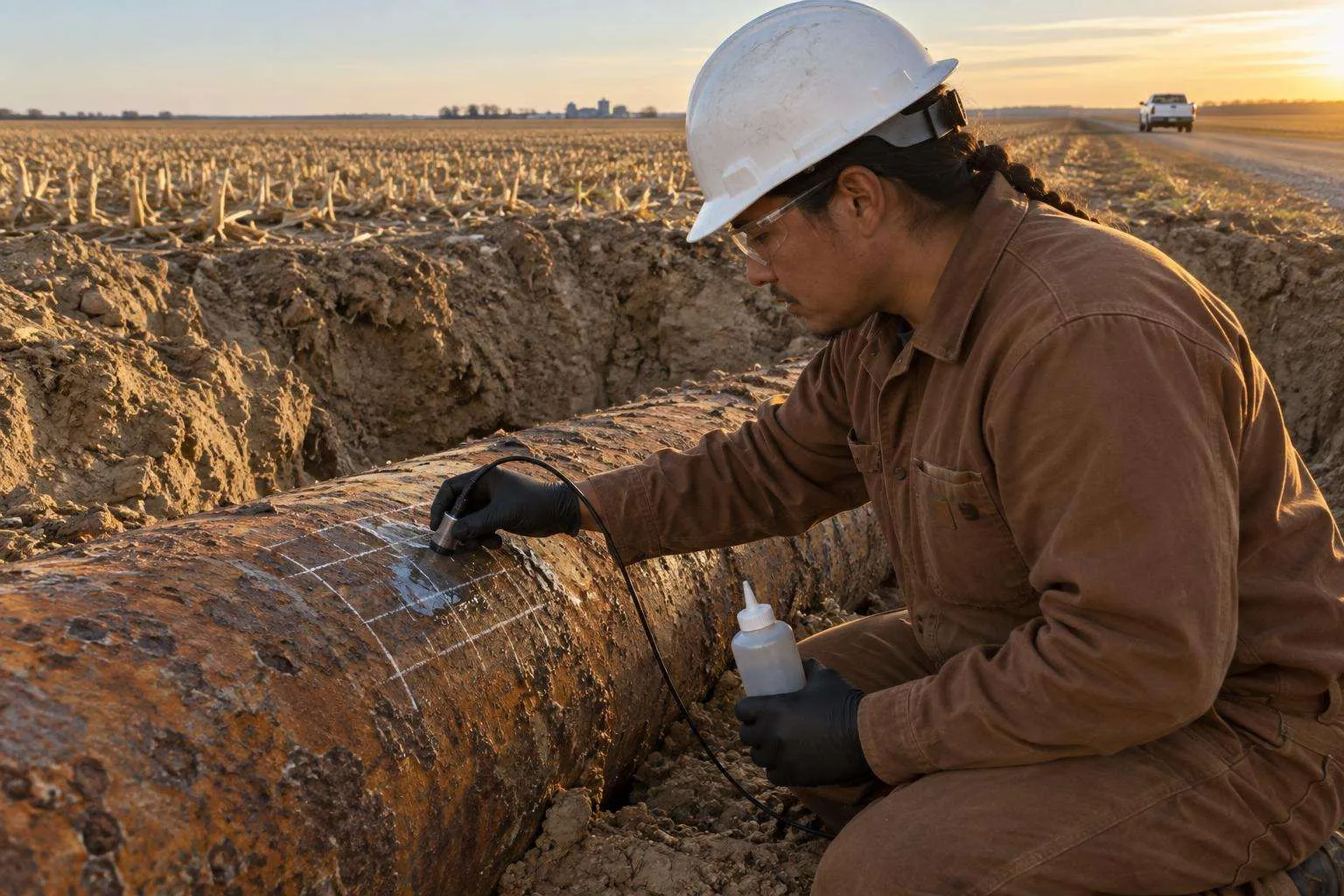
- Ultrasonic (UT): Internal flaws in welds, thickness measurement, corrosion detection. Your best bet for tanks and piping.
- Radiographic (RT): Internal voids, porosity, casting defects. Slower, more expensive, but unbeatable for complex geometries.
- Eddy Current (ET): Surface and near-surface cracks in conductive materials. Fast, portable, ideal for inaccessible areas.
- Visual/Remote (VT/RVI): Surface flaws, corrosion patterns. Drones and rope access handle areas you can’t physically reach without disassembly (which saves money).
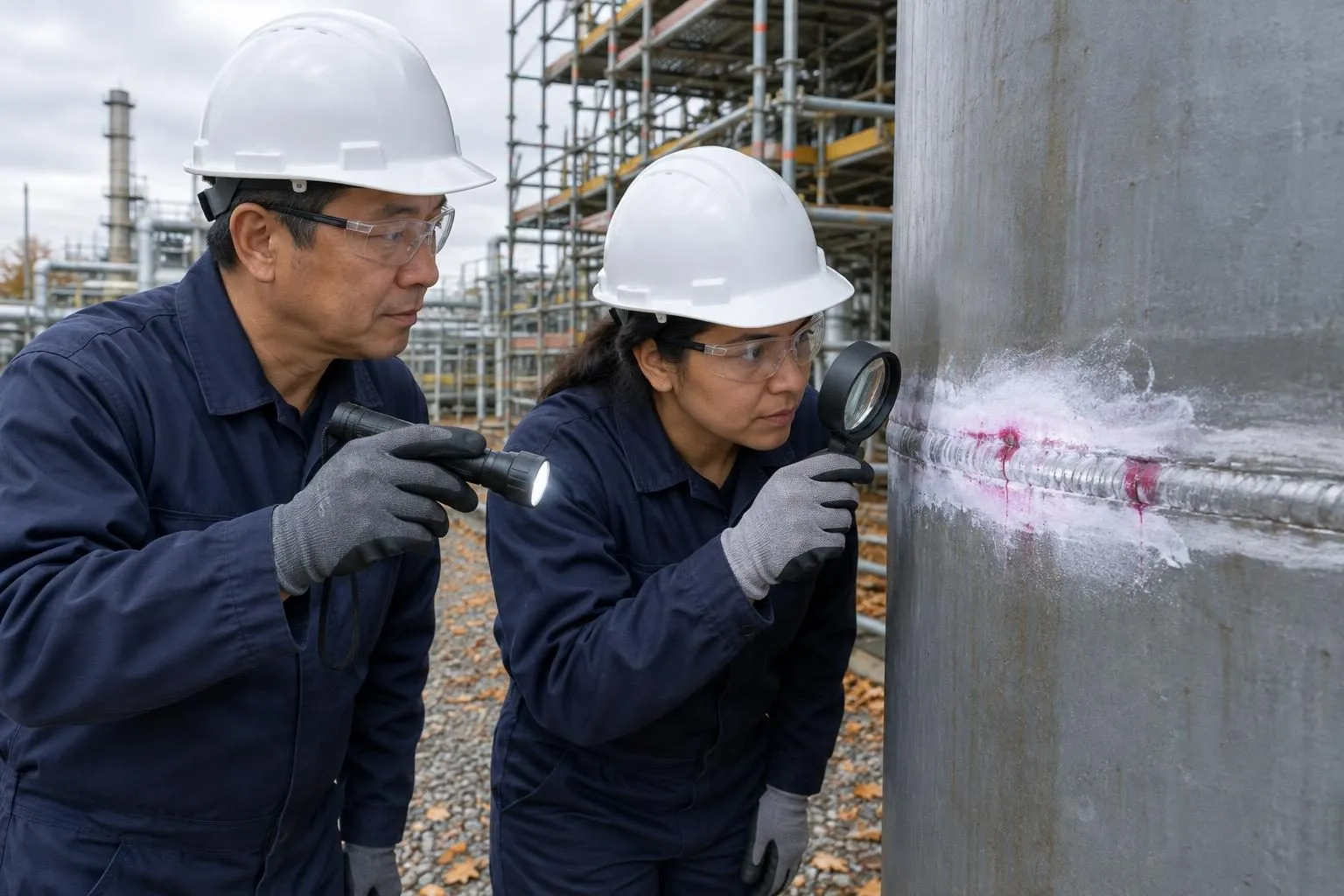
- Magnetic Particle (MT) and Liquid Penetrant (PT): Surface defects in ferrous and non-ferrous materials; usually supporting methods.
A firm that asks about your asset material, defect type, and access constraints before recommending a method is doing the homework. One that doesn’t is selling you what’s convenient, not what’s right.
Reality Check:Portable equipment and drone/rope access inspections eliminate the need to disassemble inaccessible areas. That’s not just faster—it cuts costs dramatically. Ask your firm whether they have these capabilities.
Your Practical Bottom Line
Here’s what happens next:
-
Make a list of 3-5 firms in your region that specialize in your industry (aerospace, manufacturing, petrochemical, construction—it matters).
-
Call and ask question #2 and #5 above. If they can’t explain their method choice or don’t have references, remove them.
-
Check certifications directly. Ask for ASNT Level III and API credentials specific to your asset type. Verify they’re current; don’t assume a website is up to date.
-
Get written quotes that include methodology, timeline, compliance documentation, and quarterly review processes. Vague quotes are worthless.
-
Call their references. Spend 15 minutes on this. It’s the difference between a good hire and a costly mistake.
-
Prioritize one-stop shops with 24-48 hour turnaround if you have multiple testing needs. You’ll save time and money.
The firm you choose will either catch defects early or let them become emergencies. That’s the only metric that matters.
Next steps: Read our complete guide to NDT inspection firms for deeper dives into standards, methods, and provider options. For industry-specific guidance, check out our petrochemical inspection checklist or aerospace testing standards guide.
Done reading? Get quotes from NDT inspection firms near you.
Takes about a minute. Free, no obligation; providers reply to you directly.
Popular cities: