
Get free quotes from non-destructive testing services near you
Takes about a minute. Free, no obligation; providers reply to you directly.
I got a call three years ago from a plant manager who’d just had a critical weld failure. Not catastrophic—nobody got hurt—but it cost them $180K in downtime and repair. When I asked why they hadn’t caught it earlier, he said something I’ve never forgotten: “We thought visual inspection was enough. We didn’t realize there was this whole layer of testing we weren’t doing.”
That’s the real gap most people have about NDT firms. You hear “non-destructive testing” and think it’s just someone looking at something closely. In reality, it’s a sophisticated process involving specialized equipment, certified technicians, and a methodical hunt for defects that are invisible to the naked eye—defects that can shut down your operation or, worse, create safety liabilities.
Here’s what actually happens behind the scenes.
The Short Version:NDT inspection firms send certified technicians to examine equipment and structures using specialized equipment (ultrasonic, radiographic, magnetic particle, dye penetrant, eddy current, and visual testing) to find internal and surface defects without damaging the asset. They document findings, interpret results against industry standards, and deliver a report with actionable repair recommendations. A typical engagement runs $5,000–$50,000+ depending on scope and complexity.
Key Takeaways
- NDT firms employ approximately 17,302 certified inspectors across the US, serving aerospace, oil & gas, manufacturing, power generation, and infrastructure sectors
- Technicians must hold ASNT Level II certification in at least one testing method (UT, MT, PT, RT, ET, VT); some roles require AWS CWI credentials
- The process spans from pre-inspection planning through calibration, execution, analysis, and comprehensive reporting with defect classifications
- Common challenges include equipment calibration failures, interpreting inconclusive results, and documentation errors—all preventable with proper protocols
What You’re Actually Paying For (Spoiler: It’s Not Just the Inspection)
When you hire an NDT firm, you’re not buying a service technician who shows up with a flashlight. You’re buying expertise across multiple layers.
Here’s the breakdown:
Planning & Logistics — Before anyone touches your equipment, the firm reviews your asset, existing drawings, maintenance history, and regulatory requirements. They’re asking: What are we looking for? What method makes sense? Do we need special access equipment? What safety protocols apply? This isn’t busywork. A plan done wrong kills the entire inspection’s credibility.
Equipment Setup & Calibration — Every single tool has to be verified daily. A miscalibrated ultrasonic testing (UT) device might miss a 2mm fatigue crack. A radiographic system with drift will produce false positives. Firms maintain calibration logs and backup equipment because downtime during inspection wastes everyone’s time and money.
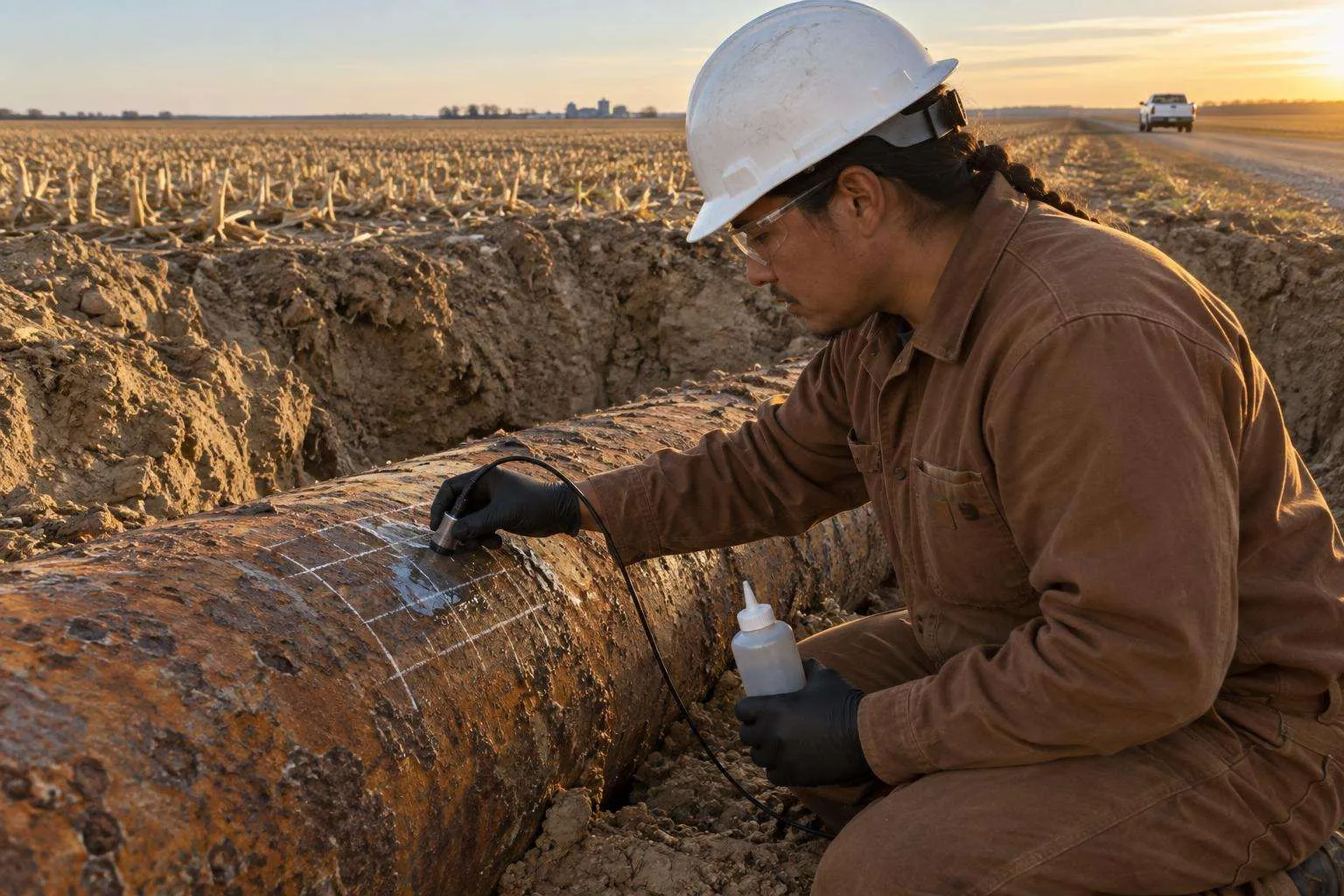
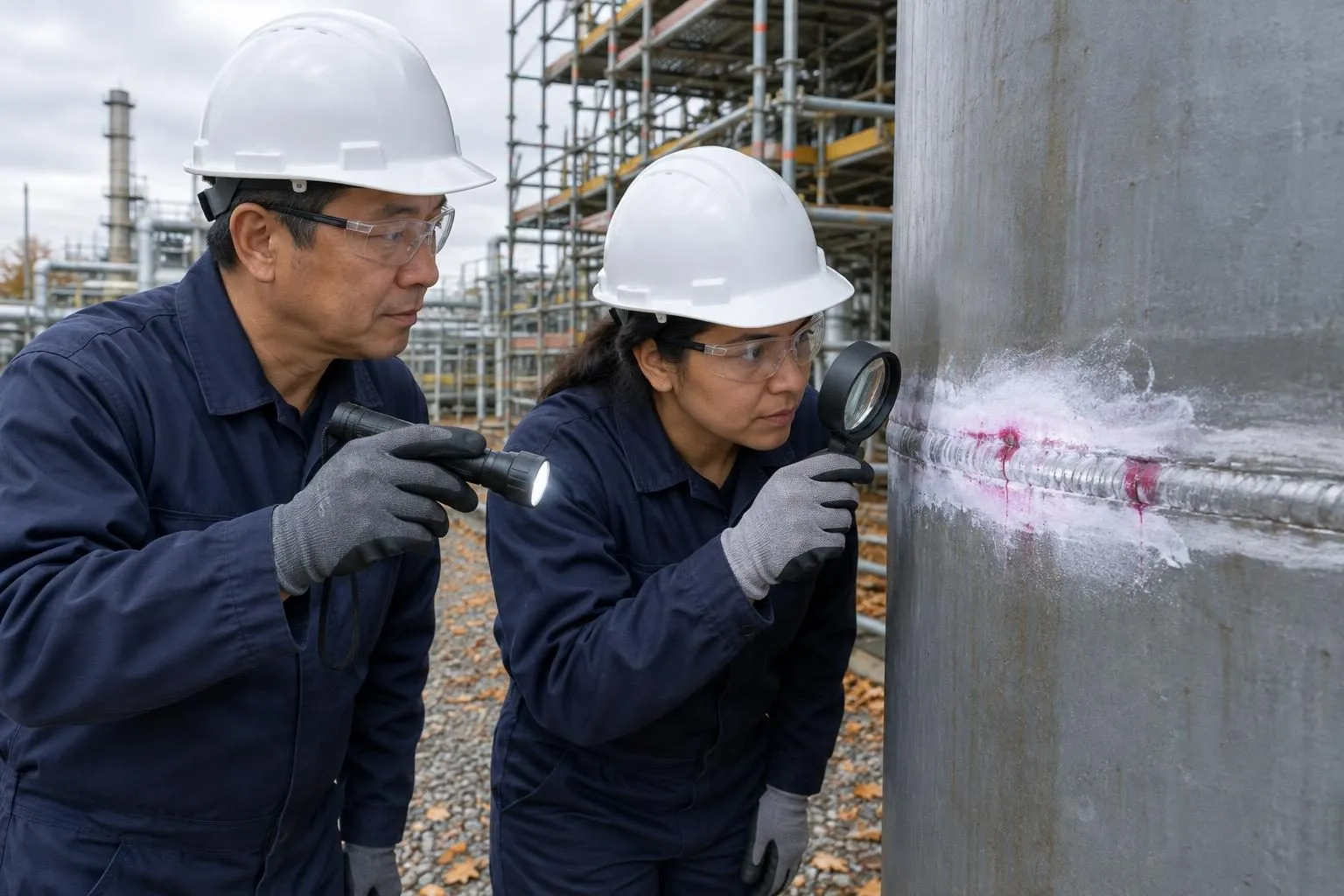
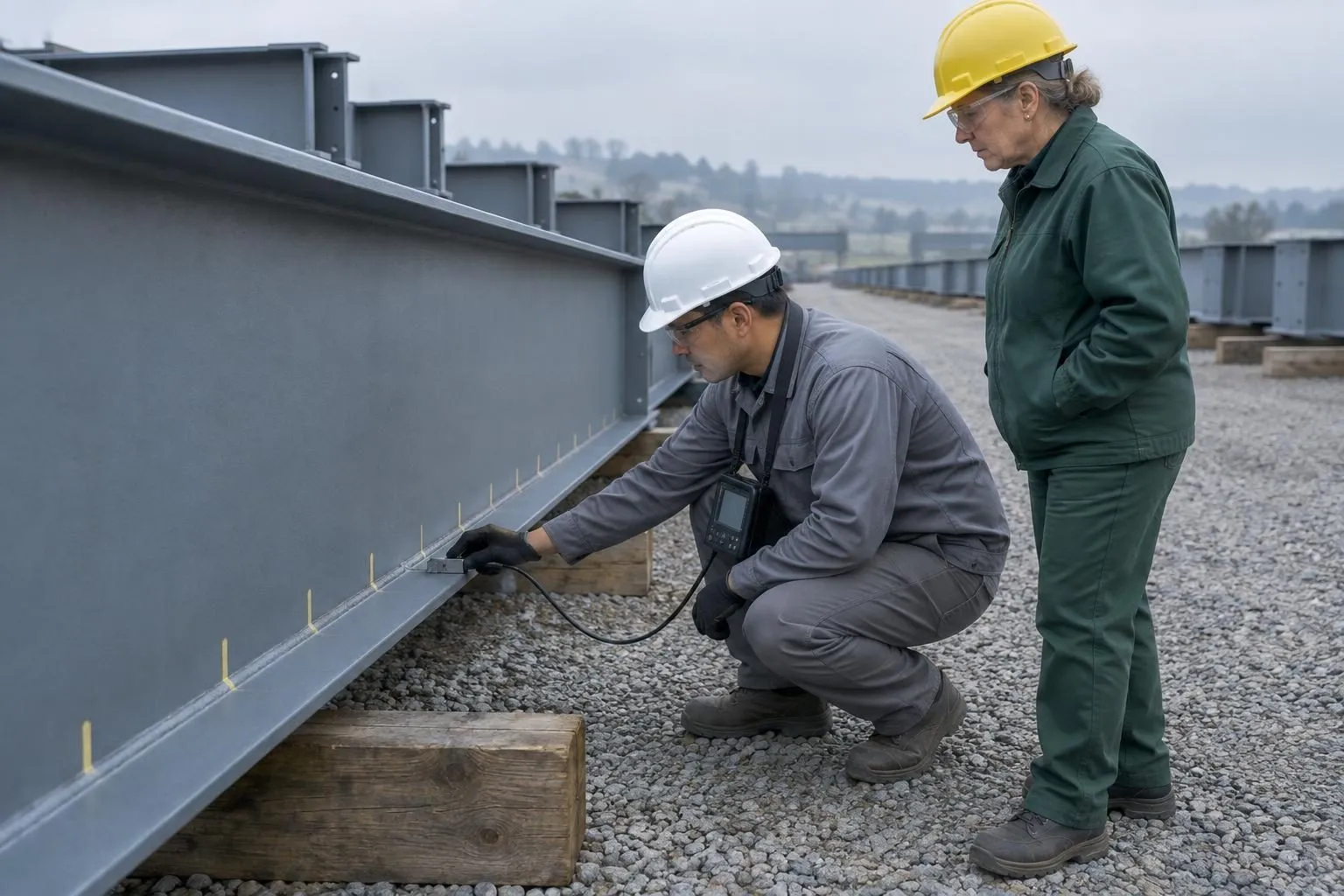
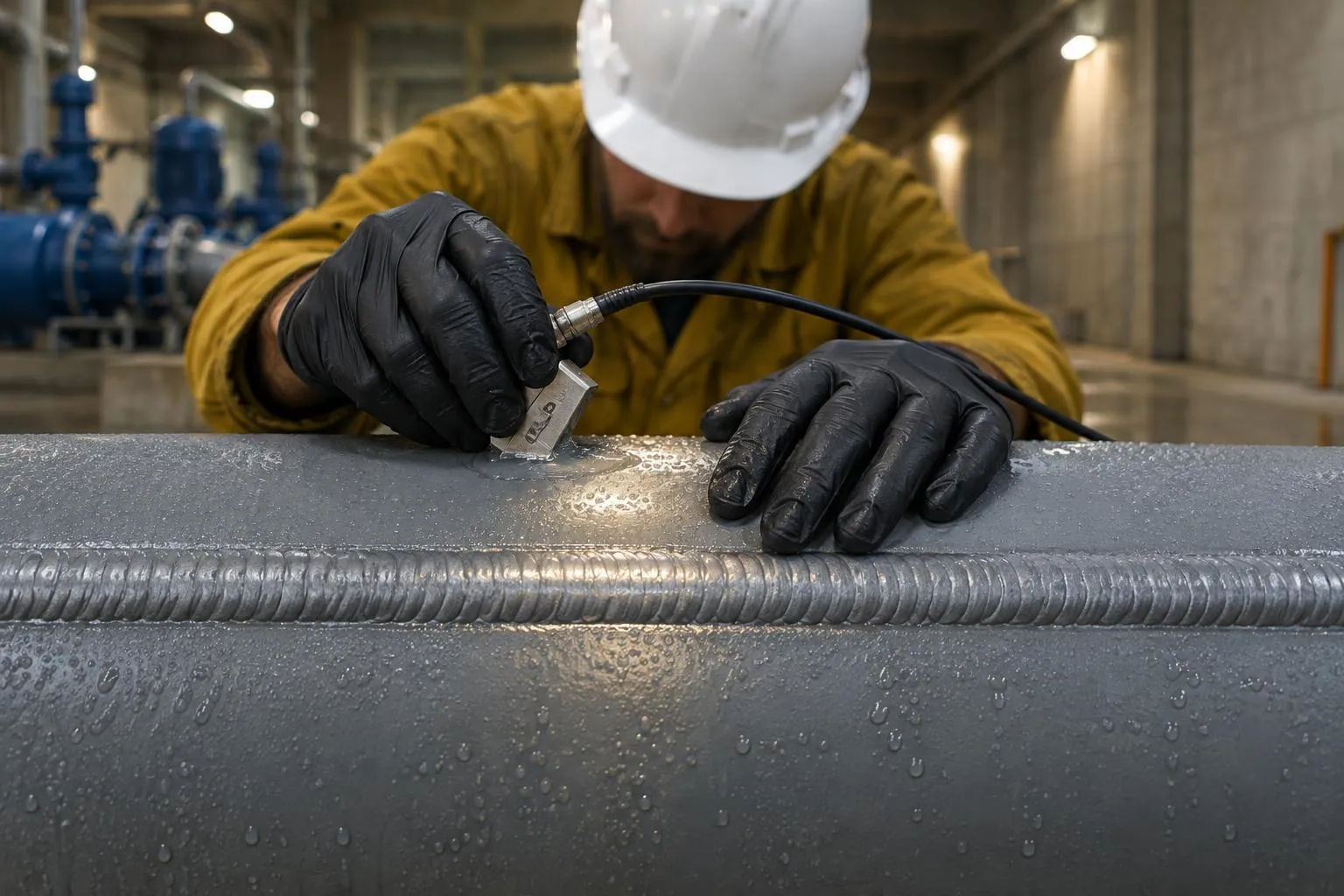
The Actual Testing — This is where method selection matters. An offshore wind farm inspector isn’t using the same approach as someone checking an aerospace fuselage weld. Here’s the typical toolkit:
| Testing Method | What It Finds | Best For | Setup Time |
|---|---|---|---|
| Ultrasonic (UT) | Internal voids, laminations, cracks, corrosion thinning | Pressure vessels, welds, pipes, structural steel | 30-60 min |
| Radiographic (RT) | Internal defects, porosity, inclusions in welds | Critical aerospace/nuclear welds | 60-180 min (radiation safety) |
| Magnetic Particle (MT) | Surface and near-surface cracks, discontinuities | Ferrous materials, forgings, castings | 15-45 min |
| Dye Penetrant (PT) | Fine surface cracks not visible to the eye | Aluminum, stainless, non-ferrous metals | 20-60 min |
| Eddy Current (ET) | Surface cracks, conductivity changes, corrosion depth | Fatigue cracks in critical turbine components | 30-90 min |
| Visual (VT) | Surface defects, coating integrity, assembly issues | First-pass screening, overall condition | 10-30 min |
The Interpretation — This is where the certification level actually matters. A Level II technician can execute tests and evaluate against acceptance criteria. A Level III can write procedures and make judgment calls on ambiguous results. When a UT scan shows something unclear—could be a crack, could be material variation—they run additional confirmatory tests and document their reasoning.
Documentation & Reporting — A proper NDT report includes test methodology, specific locations inspected, findings with precise measurements, photographs/imaging, defect classifications, and repair recommendations. This report often becomes part of your compliance record for audits, insurance claims, or regulatory reviews.
Reality Check:Most firms don’t charge separately for planning and reporting. You’re paying per inspection day (typically $150–$500/hour per technician, depending on certification level and location). The total project bill ($5,000–$50,000+) reflects the complexity, access difficulty, and number of assets being examined.
A Typical Engagement: From Call to Delivery
Day 1: The Intake — You call. You describe the problem (a weld that’s been in service for 15 years, intermittent vibration, post-incident verification). The firm asks:
- What’s the asset (material, thickness, geometry)?
- What’s the history (age, operating conditions, any prior repairs)?
- What are the regulations (ASME, API, AWS, aerospace standards)?
- What’s the access like (confined space, elevated, subsea)?
- Timeline and budget?
This conversation determines method selection and crew size.
Day 2–3: Planning & Logistics — The firm develops an inspection plan based on industry codes (ASNT standards, AWS, API), your asset specifics, and regulatory requirements. They arrange equipment, schedule travel if onsite, brief the client on safety protocols.
Day 4+: Execution — Technicians arrive with calibrated equipment. They run tests, document results in real-time, take photographs, and flag anomalies. For critical inspections, they may consult on-site with you or your engineering team about unexpected findings.
Post-Inspection: Analysis & Reporting — Back at the office, the firm reviews all data, cross-references against acceptance standards, classifies defects (pass/fail/conditional), and writes the final report with repair recommendations and urgency levels.
Delivery — You get a comprehensive report, imagery, and often a recommendations meeting where they explain findings in plain language.
Pro Tip:Don’t wait until you suspect a problem to hire an NDT firm. Preventive inspections—especially for assets approaching end-of-life or operating in harsh conditions (offshore, high-temperature, corrosive environments)—are vastly cheaper than emergency interventions. A $12,000 preventive UT scan beats a $500,000 unplanned shutdown.
The Skills Gap That Never Gets Talked About
Here’s something the industry quietly stresses about: there are roughly 17,302 NDT technicians in the US, but not all of them are equally competent, and the field is perpetually short of Level II and Level III certified personnel.
Why? ASNT Level II certification requires:
- Months of formal training
- Supervised on-the-job (OJT) experience under a Level III technician
- A rigorous written exam
- Specific method certifications (UT, MT, PT, RT, ET, VT—some technicians only certify in one or two)
Top-tier NDT firms invest heavily in mentoring junior technicians through this pipeline because replacements are hard to find. If your firm can’t explain their technician development process, that’s a red flag.
Common Pitfalls (and How Real Firms Avoid Them)
| Problem | Why It Happens | How to Avoid It |
|---|---|---|
| Equipment miscalibration | Technicians skip daily checks or logs are sloppy | Insist on seeing calibration records; ask about backup equipment |
| Inconclusive results | Single testing method isn’t definitive for the asset | Hire firms that use multi-method testing; don’t accept “unclear” without follow-up |
| Poor documentation | Technicians rush report writing or use inconsistent formats | Request samples of prior reports; check for defect classifications and photos |
| Safety violations | Offshore/hazardous environment protocols ignored | Confirm ASNT/AWS certifications and ask about safety audits |
| Scope creep or surprises | Hidden defects discovered mid-inspection, driving unexpected costs | Get a detailed quote upfront that breaks down expected vs. contingency hours |
Practical Bottom Line
If you’re hiring an NDT firm for the first time, here’s what to do:
-
Define the problem specifically. “Check our weld” is vague. “Verify integrity of four critical circumferential welds on a 6-inch Schedule 40 carbon steel pipe operating at 300 PSI” is actionable.
-
Ask for credentials. Demand to see ASNT Level II/III certifications for the specific methods you need. Don’t accept “we’re qualified”—get names and credentials.
-
Request a quote that includes methodology. A solid quote specifies which test methods, locations, and number of technician-days. It should reference relevant codes (ASME, API, AWS).
-
Get references from similar assets. A firm experienced in aerospace welds might not be your best choice for subsea foundation inspection.
-
Ask about equipment and maintenance. How often is it calibrated? What happens if equipment fails mid-inspection?
-
Read sample reports. Before hiring, ask for a redacted report from a comparable project. Is it detailed? Clear defect classification? Actionable recommendations?
You’re not just buying a test—you’re buying certainty that your asset is safe and compliant. That’s worth getting right.
Related Reading:
- The Complete Guide to NDT Inspection Firms — Our hub article covering selection criteria, industry trends, and how to build an inspection program
- NDT Inspection in Offshore Wind Energy — Specific deep dive on subsea foundation and turbine inspections
Done reading? Get quotes from NDT inspection firms near you.
Takes about a minute. Free, no obligation; providers reply to you directly.
Popular cities: