
Get free quotes from non-destructive testing services near you
Takes about a minute. Free, no obligation; providers reply to you directly.
I walked into a petrochemical facility in 2019 with a clipboard and a list of “best practices” I’d pulled from an inspection manual. Within an hour, the plant manager had shut down half my inspection route—turns out the piping system I was supposed to assess had failed catastrophically two years prior, and nobody had bothered to mention it. That’s when I learned the real lesson: the NDT inspection industry doesn’t move because companies suddenly care about safety. It moves because aging infrastructure is literally falling apart, regulations are tightening, and the cost of catastrophic failure has become too expensive to ignore.
The numbers back this up. The NDT inspection market is swallowing capital at an accelerating rate, and if you’re in facility management, plant engineering, or asset integrity, these numbers should be on your radar.
The Short Version:The NDT inspection services market hit $23.08 billion in 2025 and is projected to reach $37.06 billion by 2033, growing at a 6.1% CAGR. Oil & gas dominates (aging pipelines), but infrastructure, aerospace, nuclear, and renewables are accelerating demand. If you’re managing industrial assets, this matters because inspection costs are climbing—and doing nothing is exponentially more expensive.
Key Takeaways
- Market size jumped from $21.75B (2024) to $23.08B (2025), with projections hitting $37.06B by 2033
- Oil & gas holds 40%+ of market share, but infrastructure and nuclear are the fastest-growing segments
- Staffing crunch is real: Demand for certified NDT technicians is outpacing supply, pushing rates and service backlogs
- Automation and remote inspection (drones, RVI) are reshaping the competitive landscape, but haven’t replaced human expertise yet
The Market Is Actually Two Markets (And They’re Growing Differently)
Here’s what most people miss: when you see “NDT inspection market size,” you’re looking at conflicting data—because there’s no single agreed-upon definition. The industry uses three overlapping buckets:
1. The Broader NDT & Inspection Market: $11.2 billion (2026), growing at 8% annually through 2030. This is equipment, software, training, and services bundled together.
2. The NDT Services Market (what actually matters): $19.81 billion (2026), growing at 9.9% annually—projected to hit $28.57 billion by 2030. This is the labor-intensive inspection work you actually hire out.
3. The NDT Inspection Service Market (the longest forecast): $23.08 billion (2025), climbing to $37.06 billion by 2033 at 6.1% CAGR. This is the most realistic number if you’re looking at pure inspection revenues.
The discrepancy? Different analysts define “services” differently. But the pattern is consistent: this is a growth market that’s accelerating, not stabilizing.
Reality Check:Nobody in the industry agrees on exact market size because there’s no regulatory body forcing standardized reporting. If a vendor quotes you $10B or $40B for the “NDT market,” they’re probably picking the number that makes their growth story look best. The real number is somewhere in the $20–25B range today and climbing.
Where the Money Actually Is (And Why It’s Concentrated)
The market isn’t evenly distributed. Here’s the breakdown:
| Sector | Market Share / Growth Rate | Why It Matters |
|---|---|---|
| Oil & Gas (Pipelines, Subsea, Offshore) | ~40% of market; 4.5–9.0% CAGR | Aging pipeline networks, regulatory pressure after high-profile failures, deepwater assets requiring specialized inspection |
| Public Infrastructure (Bridges, Tunnels, Dams, Roads) | ~15–20% of market; 5.5–12.0% CAGR | Deferred maintenance crisis in US/Canada/Australia; aging concrete/steel structures; post-COVID infrastructure spending |
| Power Generation (Nuclear, Wind, Hydro) | ~10–15% of market; 6.5–14.0% CAGR | Nuclear requires recurring volumetric inspection; offshore wind inspections are exploding; grid modernization |
| Aerospace & Aviation | ~8–12% of market; stable, 6–8% CAGR | Strict regulatory requirements; older fleets requiring fatigue assessment |
| Manufacturing & General Industry | ~10–15% of market; 4–7% CAGR | Pressure vessels, automotive, food & beverage; slower growth but steady demand |
The plot twist: Oil & gas is the largest segment, but it’s growing slower than the others. Infrastructure and renewables are where the acceleration is happening—and both sectors are massively underfunded, which means inspection backlogs are building.
The Big Players Are Consolidating (And That Matters for Your Costs)
The market is “moderately concentrated,” which is industry speak for “dominated by a few names, but not a total monopoly.”
The top tier:
- SGS Group (Switzerland): Multinational powerhouse, $20B+ annual revenue across all services
- Bureau Veritas (France): $9B+ annual revenue; heavy in oil & gas and renewables
- Intertek (UK): $7.5B+ annual revenue; aggressive pricing in competitive bids
- Applus+ (Spain): $2.7B+ annual revenue; high-margin technical services
- MISTRAS Group (US): $800M+ annual revenue; specialized in nuclear and offshore wind
Below that are mid-market regional players and specialized boutiques (ROSEN for pipelines, TWI for welding, Element Materials for aerospace).
Pro Tip:If you’re bidding out an inspection contract, get proposals from at least two multinational firms and one regional specialist. The multinationals have standardized processes and better equipment; the regional players often have deeper expertise in your specific asset and will undercut on price to win the contract.
Why Demand Is Actually Outrunning Supply
This is the part that should worry facility managers: certified NDT technicians are harder to find than the work to inspect.
Here’s why:
- ASNT Level II/III certification takes 2–5 years of documented work experience. You can’t rush it.
- The job is hazardous (confined spaces, radiation exposure, high-altitude rope access). Good people burn out or move into safer roles.
- Aging workforce: Many inspectors are 55+. Retirement is creating a talent cliff.
- Training backlogs: ASNT-approved training centers can’t keep up with demand.
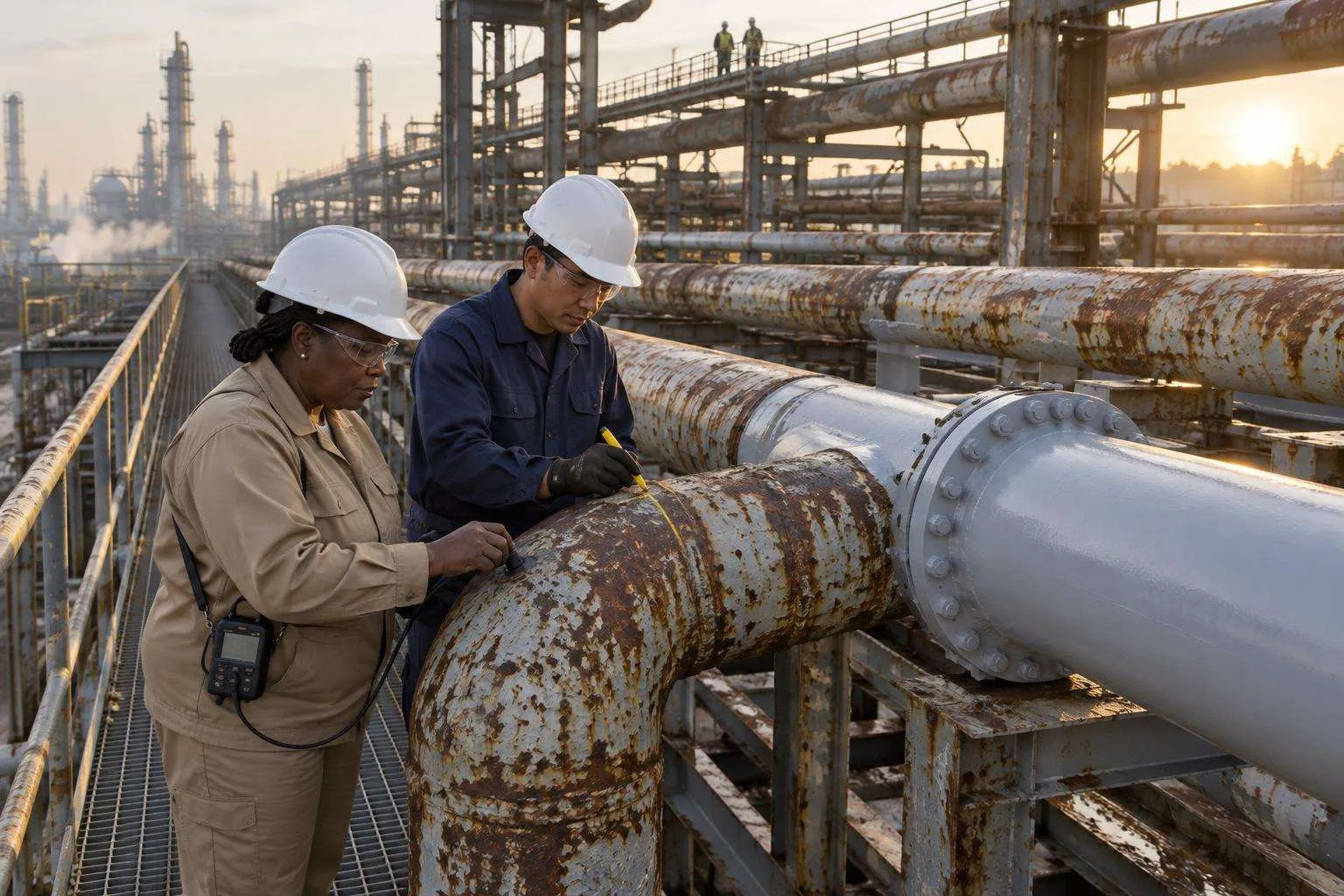
The result? Inspection backlogs are real. A facility that would have gotten their annual inspection completed in Q2 is now pushing into Q4. And when demand exceeds supply, guess who pays: you do. Rates are creeping up from the $150–$500/hour range toward $200–$600+/hour for specialized work (ultrasonic wall thickness on aged pipelines, volumetric inspection on nuclear components).
Reality Check:Your inspection vendor isn’t slow because they’re lazy. They’re slow because there literally aren’t enough certified technicians to go around. This is going to get worse for another 3–5 years before training programs catch up.
Automation Is Coming (But Not the Way You Think)
The industry narrative is: “Drones and AI will replace field inspectors.”
The reality is messier. Here’s what’s actually happening:
What’s scaling up:
- Remote Visual Inspection (RVI) for accessible assets (tanks, pipe welds, vessel exteriors)
- Drone-based inspections for structural steel, bridges, wind turbines (reduces rope-access costs and human risk)
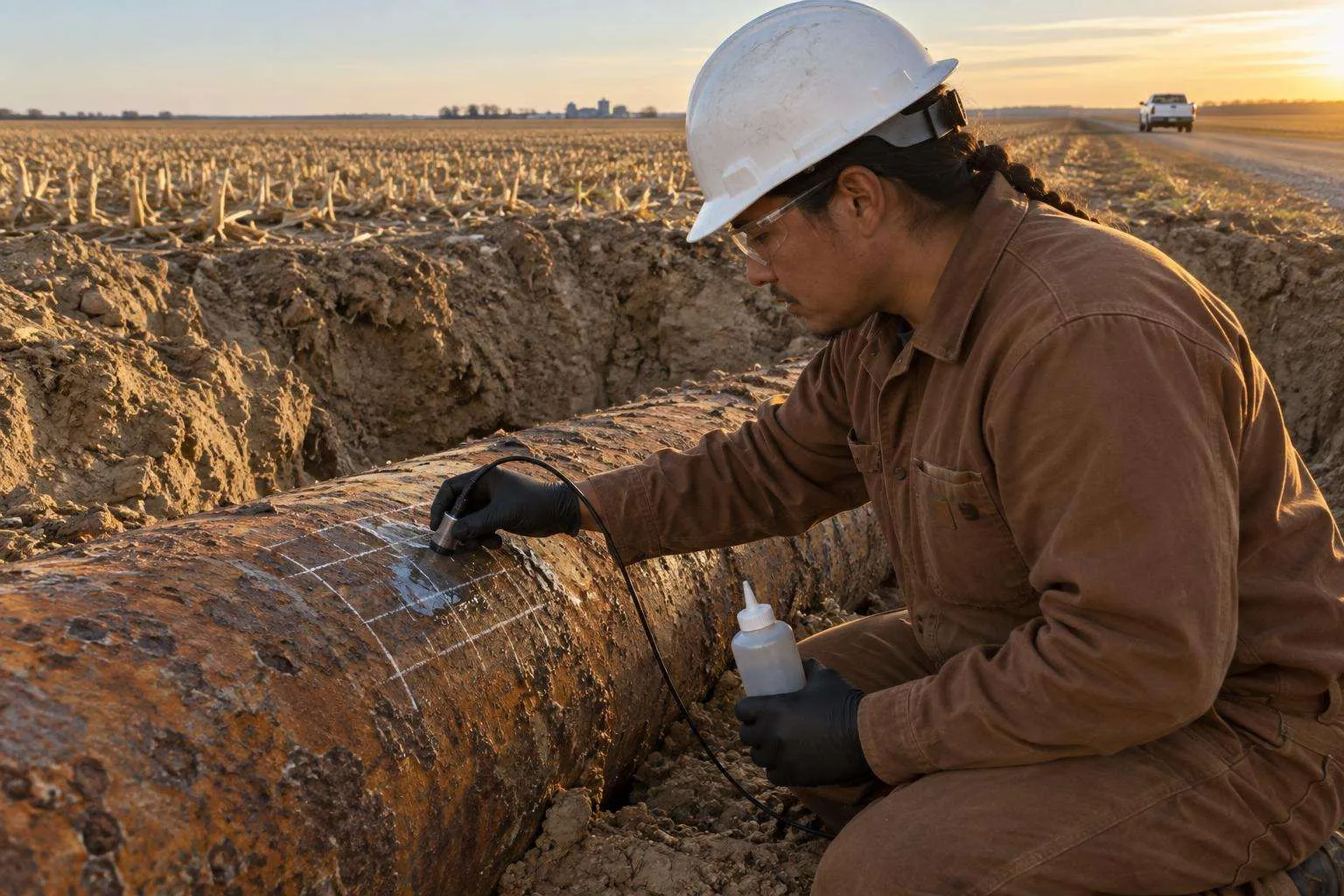
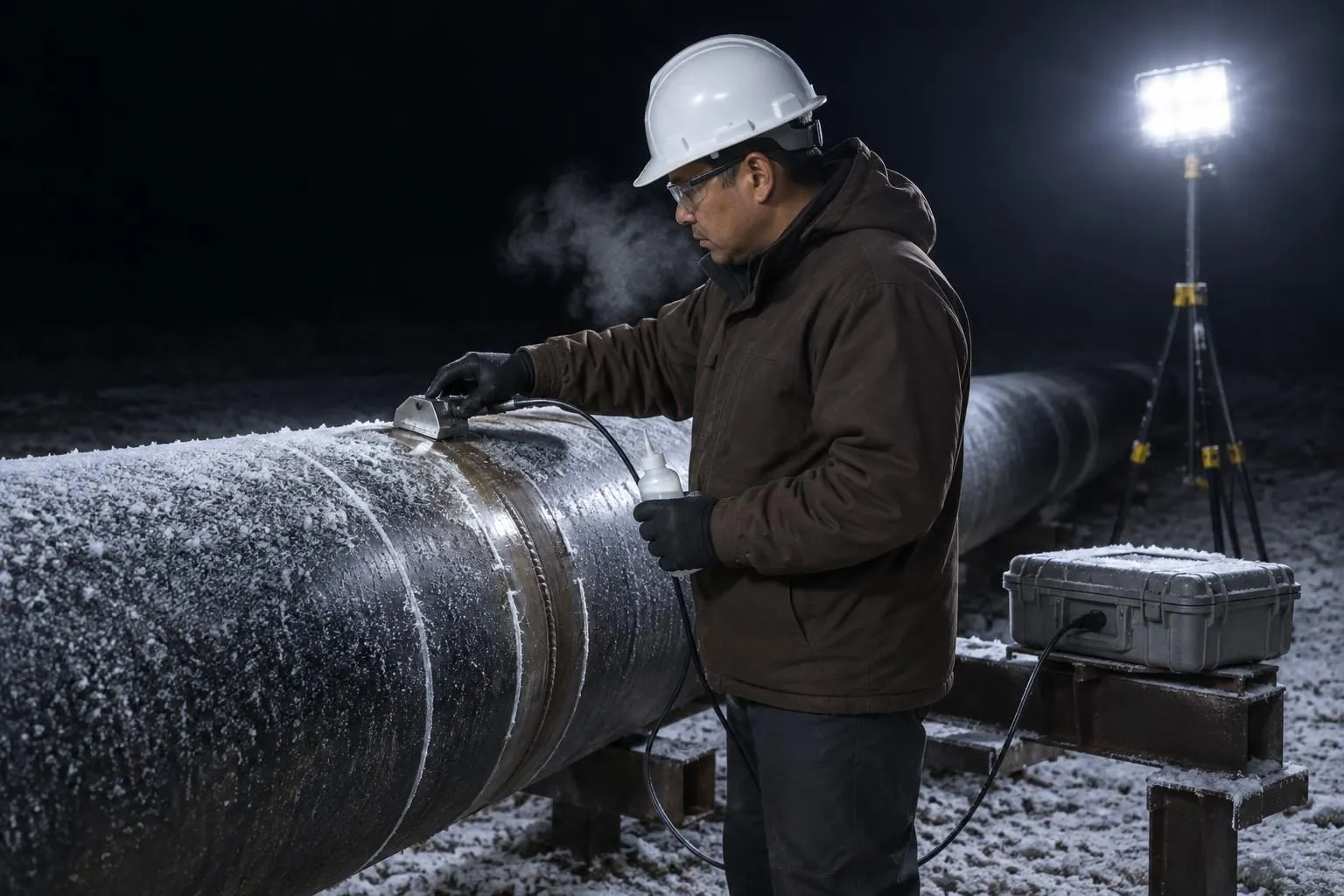
- Automated Ultrasonic Testing (UT) for pipeline wall thickness—especially subsea pipelines
What’s NOT replacing people:
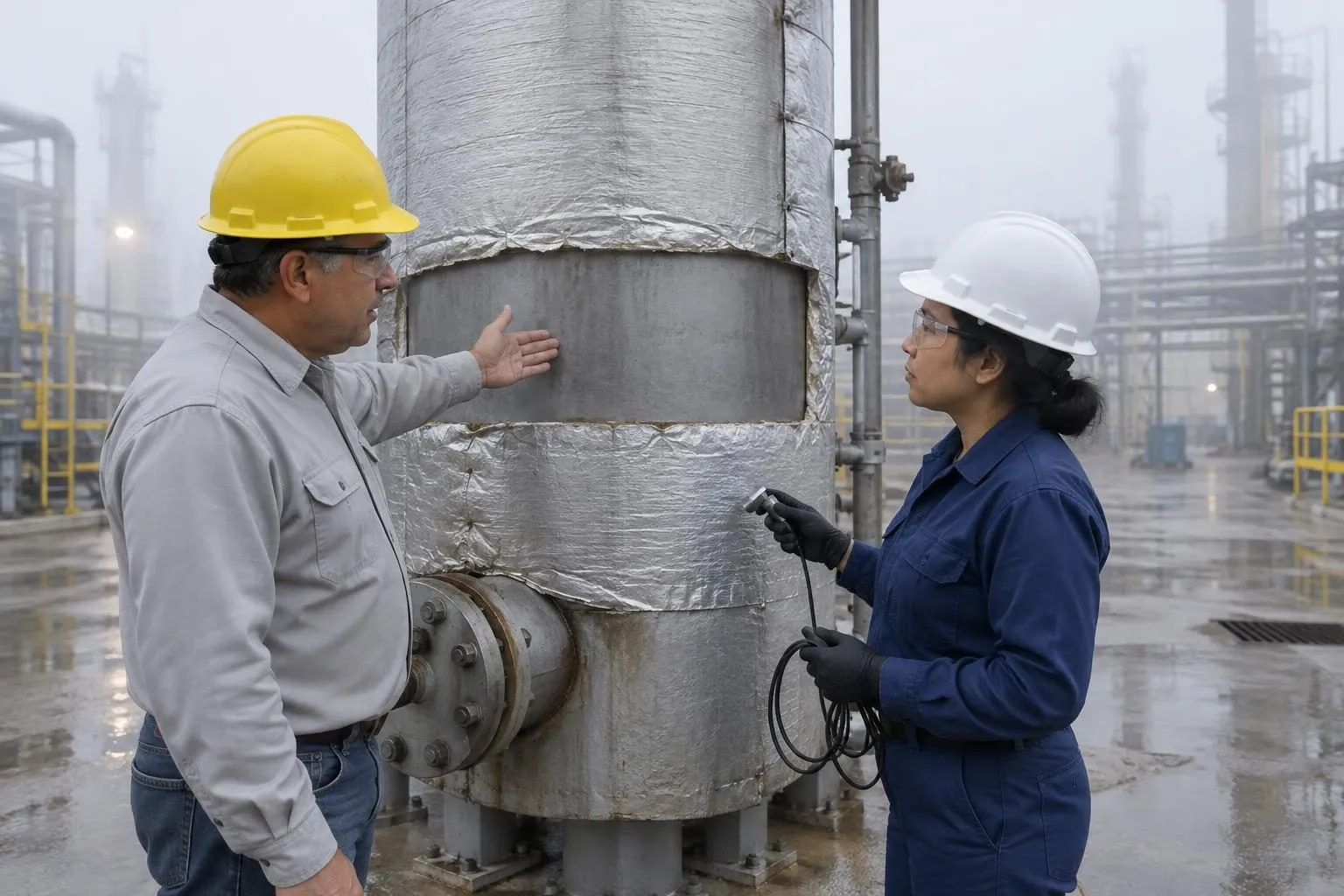
- Corrosion under insulation (CUI) detection
- Fatigue crack detection in complex geometries
- Defect sizing and severity assessment (AI is still bad at this)
- Interpretation and sign-off (regulators require certified humans, not algorithms)
The playbook: automation handles 40% of routine measurements, certified technicians handle the 60% that requires judgment and certifiable evidence.
This is actually good news if you’re managing assets: it means inspection costs are being redistributed (fewer expensive field hours, more analytics-and-reporting work), not eliminated.
The Regional Wild Card: US Infrastructure Spending
If you’re in North America, watch this number: $110 billion in federal infrastructure spending over 10 years (Biden’s infrastructure bill). That’s money earmarked for bridge inspections, pipeline replacements, dam rehab, and water system upgrades.
Translation: The US infrastructure inspection market is about to spike. States and municipalities that have been deferring maintenance are finally getting the budget to hire inspectors. This is a 2–4 year tail wind for regional NDT firms that specialize in infrastructure.
Pro Tip:If you manage a bridge, tunnel, or water system, get your inspection plan locked in for 2026–2027. After that, the inspection backlog will be worse and rates will be higher.
Practical Bottom Line
Here’s what you need to do:
-
If you’re a facility manager or integrity engineer: Your inspection costs are going up because labor is tight. Budget for 8–12% annual increases through 2028. Get ahead of it by scheduling your high-priority inspections in Q1 2026, not Q3.
-
If you’re in oil & gas or infrastructure: Know that your inspection costs are about to become a line-item negotiation. Get competitive bids, but understand that the lowest price often means the longest backlogs. Factor in timing risk when you evaluate proposals.
-
If you’re considering an NDT career or training: The job market is good and will be for at least 5 more years. Get ASNT Level II certification if you can—it’s the difference between $45/hour and $70+/hour.
-
If you’re a vendor or consultant: The market is growing, but it’s consolidating among the big players. Differentiation happens in specialization (subsea, nuclear, aviation) or geography (regional expertise in underserved markets).
The NDT inspection industry isn’t glamorous, but it’s essential infrastructure work in a moment when aging assets are failing faster than we can fix them. That’s why the market is growing at 6–10% annually while most industries are flat.
Want deeper context on the inspection industry? Check out our complete guide to NDT inspection firms for strategy and selection criteria. Or if you’re evaluating specific vendors, see what regional NDT specialists bring to the table versus multinationals.
Done reading? Get quotes from NDT inspection firms near you.
Takes about a minute. Free, no obligation; providers reply to you directly.
Popular cities: